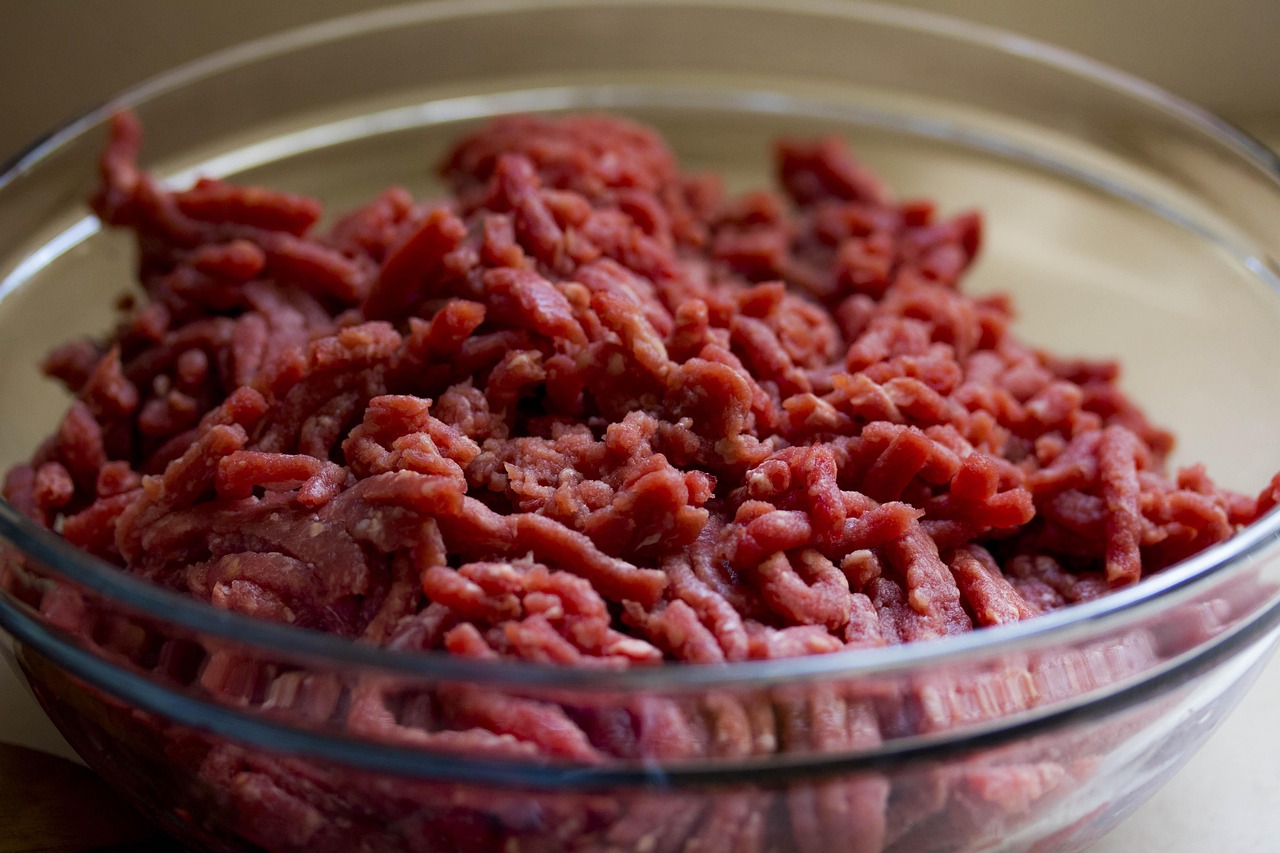
Donald Trump wants to bring down the price of ground beef in the United States quickly. To do it, his administration will allow up to 300,000 metric tonnes of products intended for ground beef to enter the country tariff-free for 90 days, beyond the volumes normally covered by U.S. import quotas.
The president has also said the beef would be sold at 25% below current market prices. For now, however, several important details remain unclear: which countries will supply the beef, how the volumes will be allocated, which exporters will qualify, and exactly which products will be eligible.
Why is U.S. beef so expensive?
The underlying problem is fairly simple: the United States does not currently have enough cattle.
As of July 1, 2026, USDA counted 28.5 million beef cows in the United States, down another 1% from a year earlier. The 2026 calf crop is also expected to decline, to 32.5 million head. At the same time, heifers kept for beef-cow replacement are up 3%, suggesting that herd rebuilding may finally be starting.
But rebuilding a cattle herd cannot happen quickly. A heifer kept today must be raised, bred, calve, and then her calf must itself grow long enough to enter the beef supply chain. We are talking about years, not months.
That is one reason the United States already imports enormous quantities of beef. In 2025, U.S. beef imports reached a record 5.47 billion pounds, and USDA projected roughly 5.68 billion pounds for 2026. Much of that imported product is lean beef used in U.S. ground beef production.
Producers are pushing back
American cattle producers have not exactly welcomed the announcement.
Their argument is understandable. When supply is tight and prices rise, the market normally sends producers a signal: producing more becomes more attractive. In the cattle business, that can mean keeping more heifers for breeding instead of sending them into the beef supply chain.
Some producer groups therefore argue that increasing imports precisely when prices are high could weaken the economic incentive needed to rebuild the U.S. herd.
That argument deserves some nuance.
Three months is a very short time in the life of a cow
The announced measure lasts only 90 days.
If this is genuinely a one-time, temporary measure, I would not change an entire breeding strategy because of it. A cattle producer deciding today whether to retain a heifer is making a decision based on conditions expected one, two, or three years from now, not simply on the price of beef over the next quarter.
If producers believe the extra imports will disappear after 90 days and the U.S. cattle market will remain structurally tight, keeping replacement heifers still makes sense.
The greater risk would come if producers begin to believe Washington will repeat the same intervention every time beef prices rise above a politically acceptable level. At that point, the issue is no longer 300,000 tonnes. It becomes the signal sent to the market: if prices rise too much, the government will step in to push them back down.
That kind of expectation could affect long-term investment decisions.
A lot of beef, but also a very large market
Three hundred thousand tonnes is about 661 million pounds of beef. That is a large number.
But the United States was already importing more than 5 billion pounds of beef per year before this announcement. The additional volume therefore amounts to roughly 12% of recent annual imports, concentrated into a three-month period.
Will that be enough to create a major decline in the retail price of ground beef? That, to me, is the real unknown.
The price will probably fall. Grocery stores may even run specials showing discounts in the neighbourhood of 25% for a while. But the idea that consumers will enjoy a lasting 25% reduction because imported beef itself is 25% cheaper is, to put it mildly, far-fetched.
There are importers, processors, distributors and retailers between the imported product and the consumer. If a cheaper raw material enters the system, it does not follow that the entire saving will be passed along indefinitely. Before long, every link in the chain will have an opportunity to take a piece of the margin.
The irony is hard to miss
There is also a rather spectacular political irony here.
The Trump administration regularly portrays government intervention in markets as socialism or even communism. Yet when American consumers face politically uncomfortable beef prices, Washington is directly changing import conditions in an attempt to force those prices lower.
This is not a criticism of helping consumers. A temporary increase in imports may well ease some pressure at the grocery store. But it is still government intervention in the market, and a fairly explicit one.
The contrast is especially striking given how often the United States criticizes agricultural market-management systems elsewhere, including in Canada.
Consumers now, producers later
This episode illustrates a broader agricultural dilemma.
Everyone wants farmers to be profitable, right up until that profitability translates into food prices consumers find too high.
High prices are also the mechanism by which a market encourages more production. In cattle, however, the biological response is painfully slow. Consumers buy hamburger this week; producers make herd decisions measured in years.
Washington has clearly chosen to address the first problem immediately.
Whether 300,000 tonnes will meaningfully change what Americans pay at the meat counter remains to be seen.
And once the 90 days are over, the underlying problem may look exactly the same as it did before: the United States still does not have enough cattle.
Leave a Reply