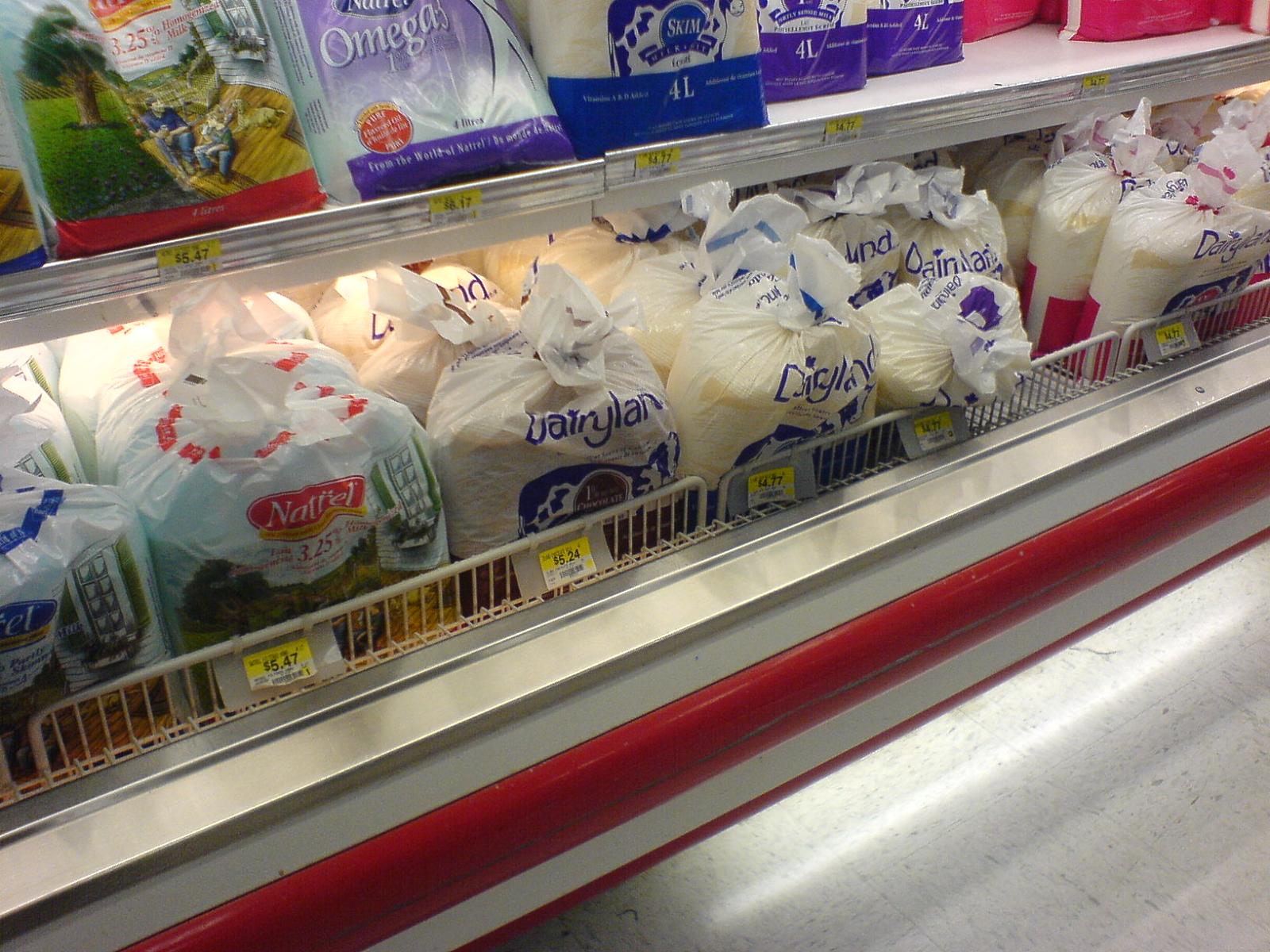
Supply management is one of Canada’s best-known agricultural systems, and probably one of the most misunderstood. It regularly appears in debates about food prices, trade negotiations, farm quotas and the future of family farms.
The basic principle is relatively simple: instead of allowing unlimited production and then dealing with large surpluses or shortages, the system seeks to match Canadian production with market demand. It does this through three main mechanisms: production management, farm-gate pricing and import controls.
This page explains how the system actually works, what it is designed to achieve, its main advantages, its limitations and the criticisms most often directed at it.
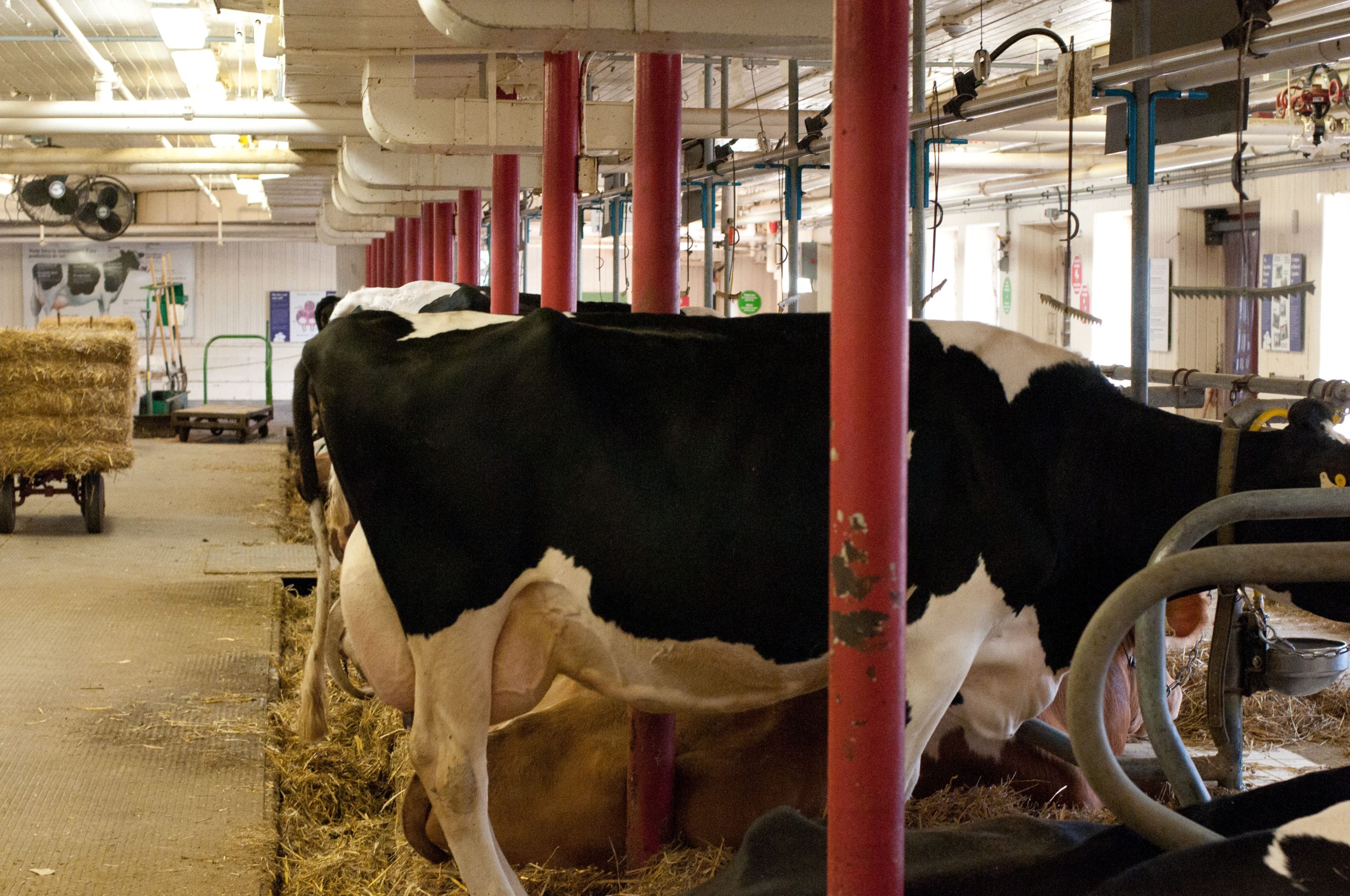
What is supply management?
Supply management is an agricultural marketing system designed to balance supply and demand. In Canada, five agricultural sectors operate under supply management:
- dairy;
- chicken;
- turkey;
- table eggs;
- broiler hatching eggs.
In dairy, the Canadian Dairy Commission plays an important national role, while poultry and egg sectors have their own national and provincial organizations.
The three pillars of supply management
1. Production management
The first pillar is matching production with market needs. This is where production quota comes in.
In dairy, for example, the Canadian Dairy Commission helps establish a national production target that is adjusted as demand changes. It is then allocated among regions, provinces and ultimately farms.
Quota does not mean Canadian milk production is frozen forever. If demand rises, permitted production can increase; if demand falls, it can be reduced. The goal is to avoid large cycles of oversupply and shortage that can destabilize prices and farm businesses.
2. Farm-gate pricing
The second pillar concerns the price paid to farmers.
In dairy, it is often said that “the government sets the price of milk.” The reality is more nuanced. The Canadian Dairy Commission analyzes production costs and economic conditions and participates in the national pricing framework. Provincial marketing boards then apply prices according to milk classes and end uses.
The farm-gate price is only one part of the final retail price. Processing, packaging, transportation, distribution and retail margins all come afterward.
3. Import controls
The third pillar is the most controversial in international trade negotiations.
Canada uses tariff-rate quotas, or TRQs. A defined volume of a product can enter at a relatively low tariff, while imports above that volume may face much higher tariffs.
It is therefore inaccurate to say Canada’s market is completely closed. Imports are allowed, but access is managed so that unlimited low-tariff imports do not make domestic production planning impossible.
Why was supply management created?
Agriculture cannot always adjust instantly to price signals. A dairy farm cannot stop feeding cows for a few weeks when prices fall, and expanding production after a shortage can take months or years.
This biological and capital-intensive reality can create repeated cycles: high prices encourage expansion, oversupply pushes prices down, farms leave the sector, and reduced production can later create shortages.
Supply management seeks to reduce that instability by planning production more closely around demand.
Main advantages
Greater stability for farms
Farmers who operate within quota have a more predictable market for their production. This can make it easier to plan investments, financing, labour and succession.
That does not guarantee profitability. Farms still face feed costs, fuel, buildings, machinery, interest rates and labour expenses.
Production tied more closely to demand
By adjusting production volumes, the system aims to reduce chronic surpluses that otherwise may need to be destroyed, exported at a loss or supported through public programs.
A more predictable domestic production base
Supporters argue that supply management helps maintain Canadian production capacity and a relatively stable domestic food supply.
Less dependence on recurring price-support programs
The philosophy is to have farm income come mainly from the market rather than from repeated government payments when commodity prices collapse.
Main criticisms
A serious defence of supply management should not pretend the system has no weaknesses.
For a current example of the debate, see my point-by-point response to Sylvain Charlebois’s ten “myths” about supply management.
Entry costs and quota values
Quota can be extremely expensive. For a farmer starting out or expanding, acquiring production rights can require substantial capital.
This creates a real contradiction: quota provides stability to existing farms, but its value can become a barrier to new entrants and farm transfers.
Consumer prices
Critics argue that supply management raises food prices by limiting competition and restricting lower-cost imports.
Retail-price comparisons, however, also reflect processing and distribution margins, exchange rates, production standards, foreign subsidies and retailer market power. It is reasonable to debate the consumer cost of the system, but difficult to attribute every Canada-U.S. price difference to supply management alone.
Less direct competition between producers
A market with controlled production does not create exactly the same incentives as a fully open market. Critics argue this may reduce pressure to become more efficient or expand aggressively.
Supporters respond that farms still compete on production costs, productivity, quality, herd management, investment decisions and access to quota.
Trade negotiations
Supply-managed sectors are regularly targeted in trade negotiations because Canada’s partners want greater access to the Canadian market.
Over successive trade agreements, Canada has granted additional import access. The political question becomes how much market access Canada is willing to concede in exchange for opportunities elsewhere.
Is supply management a closed market?
No, not literally.
Canada imports dairy products, poultry and eggs. What distinguishes supply management is that lower-tariff import volumes are limited by quotas. Beyond those volumes, much higher tariffs may apply.
A more accurate description is therefore a managed-access market.
Does supply management guarantee farm profits?
No.
It helps stabilize price and market access, but it does not control every farm expense. Two farms with the same quota can have very different financial outcomes depending on debt, efficiency, labour, buildings and investment decisions.
Can the system be defended and reformed at the same time?
Absolutely.
Quota costs, access for new farmers, transfer rules, allocation of new production and the system’s ability to adapt to new products can all be debated without rejecting the basic principle of production aligned with demand.
My perspective as a dairy farmer
I see supply management less as a privilege granted to farmers than as a contract among farmers, processors, consumers and society.
Farmers agree not to produce without limit. In return, the market is organized to provide more stable farm income. Consumers receive a relatively predictable domestic supply. The system replaces part of agricultural market volatility with collective rules.
That contract can be criticized and improved. Quota values and barriers to entry are real problems. But those flaws do not automatically mean the best alternative is a theoretically free market when the major agricultural markets Canada competes with are themselves heavily influenced by public policy and farm-support programs.
In summary
Supply management is built around a simple idea: produce according to market needs rather than produce first and deal with surpluses afterward.
- Production is adjusted through quotas.
- Farm-gate prices are governed by pricing mechanisms.
- Imports are managed through tariff-rate quotas.
- The system covers dairy, chicken, turkey, table eggs and broiler hatching eggs.
- It provides stability, but also creates costs and rigidities worth debating.
The real question is not whether supply management is perfect. No agricultural system is. The question is which rules best balance food security, farm stability, consumer interests, competition and Canada’s trade obligations.