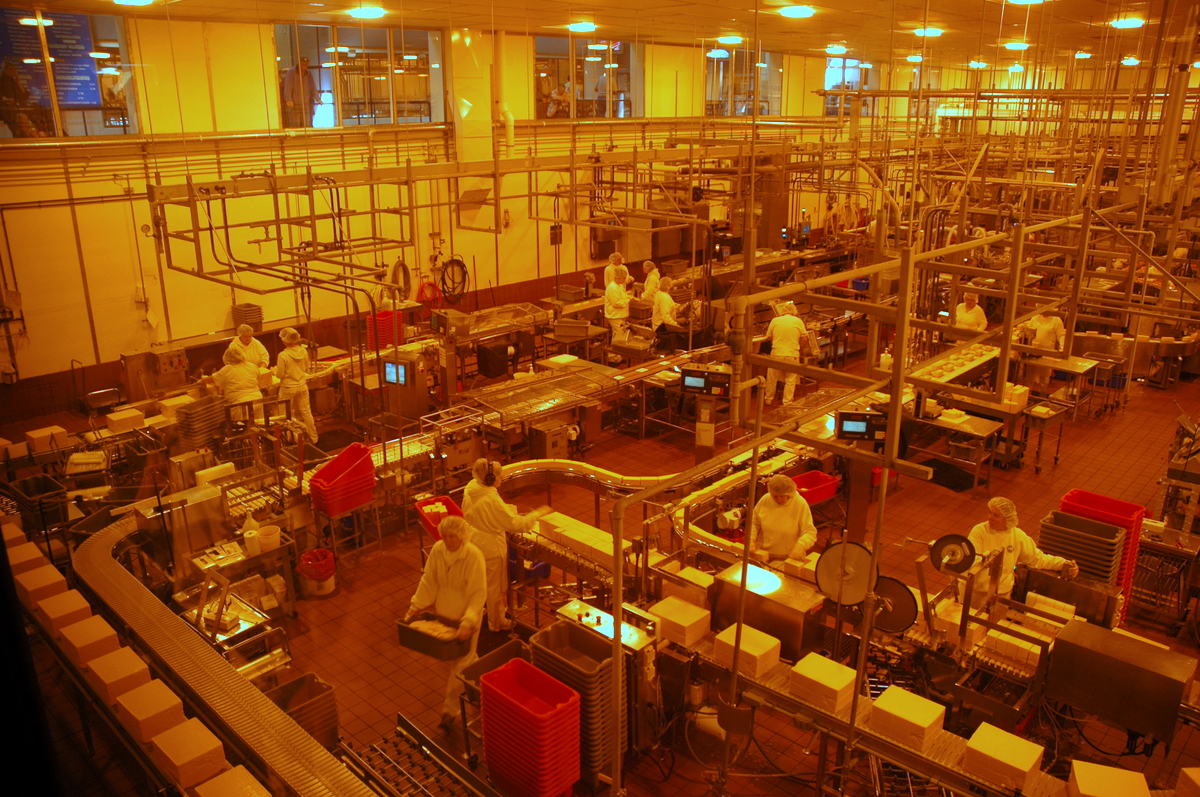
Dairy processing in Canada is the link between milk produced on farms and the products consumers buy. Once collected, milk is transported to plants where it can become fluid milk, cheese, butter, yogurt, cream, milk powder and a wide range of food ingredients.
This sector is essential to the dairy industry because it largely determines how milk is valued, which markets grow and how demand develops for butterfat, protein and other milk components.
How many dairy processing plants are there in Canada?
According to Agriculture and Agri-Food Canada, the country had 519 dairy plants in 2025. Some are large industrial facilities serving several provinces or export markets, while others are small cheese plants and artisanal processors serving regional markets.
In 2025, dairy manufacturing shipments were worth about $19.76 billion, and the processing sector employed more than 28,000 people.
What happens after milk leaves the farm?
Milk is first cooled and stored on the farm in a refrigerated bulk tank. It is then collected by tanker truck according to schedules established by marketing organizations.
At the plant, it is tested, standardized and directed to different processing lines depending on market needs.
Some becomes fluid milk. The rest can be used for cheese, butter, yogurt, ice cream, milk powder or ingredients such as proteins and natural milk constituents.
Fluid milk
Milk sold in cartons or bags represents only part of total Canadian milk use.
In 2025, roughly 27 million hectolitres were used for fluid milk, compared with about 71.47 million hectolitres used as industrial milk.
Fluid milk is generally standardized for butterfat content, pasteurized, homogenized and packaged before being distributed to retailers.
Cheese: a major market
Cheese is one of the most important outlets for Canadian milk. Agriculture and Agri-Food Canada reports about 479,500 tonnes of cheese produced in 2025.
Cheesemaking primarily uses milk protein and butterfat. Cheese type, aging and yield all affect how much milk is required and the economic value generated from processing.
Butter and butterfat
Demand for butterfat plays an especially important role in the Canadian dairy system.
In 2025, Canadian butter production reached roughly 115,600 tonnes. Butter production concentrates milk fat and leaves skim milk and other components that must then be used in other products.
This is one reason the dairy market cannot be understood only in litres. The value of milk components and processors’ ability to use them matter enormously.
Yogurt, ice cream and value-added products
Yogurt is another important market. Canadian production reached about 397,800 tonnes in 2025.
Dairy processing has also diversified into lactose-free products, Greek-style yogurt, high-protein products, nutrition beverages and specialized food ingredients.
Why are not all litres of milk worth the same amount?
Milk’s economic value varies according to its end use. Milk going into fluid milk, cheese, butter or ingredients does not necessarily generate the same revenue.
Canada therefore uses milk classes corresponding to different uses, with component prices that can vary by class.
Revenues from these markets are pooled according to provincial and regional rules. For more detail, see Milk Prices in Canada.
The role of major processors
Canada’s dairy-processing sector includes major companies such as Saputo, Agropur and Lactalis Canada, as well as many regional and artisanal businesses.
Their decisions directly affect milk demand. A new plant, an expanded cheese line or the closure of a facility can change regional collection and processing requirements.
The sector is also relatively concentrated, with large firms controlling substantial processing and distribution capacity while smaller cheese plants serve niche markets.
What role do cooperatives play?
A significant share of Canadian dairy processing is carried out by producer-owned cooperatives. Agropur is the best-known example.
The cooperative model allows producer members to participate indirectly in processing and the value added after milk leaves the farm.
Why does processing capacity matter to farmers?
Producing milk is not enough. Plants must also be able to process that milk into the products consumers want.
Higher demand for cheese or butter may require major investment in new processing lines. If existing plants are already operating at capacity, growth in milk production can be constrained by processing.
Plant location also matters because moving raw milk long distances raises logistics costs and complicates milk allocation.
Processing and supply management
Processing is an integral part of supply management.
National production is adjusted not only to what consumers buy, but also to processor needs for different products.
If butter or cheese demand grows, demand for butterfat or protein may increase and affect the national production target. Dairy quota can then be adjusted to allow the sector to respond.
Processing and international trade
Canadian processors also operate in an international commercial environment.
In 2025, Canada imported about $1.93 billion in dairy products and exported about $560 million. Canada therefore imports substantially more dairy products than it exports.
Imports include cheese, butter, whey and milk-protein substances. Exports include products such as whey, skim milk powder, cheese and yogurt.
Food safety and quality standards
Dairy plants must meet strict food-safety and quality requirements. Many facilities use HACCP systems or ISO certifications to manage food-safety risks.
Milk processing involves pasteurization, temperature control, traceability, equipment sanitation and finished-product monitoring.
Federally licensed plants can sell products across Canada and into export markets, while provincially licensed facilities are generally limited to their own province.
A sector that is changing too
Dairy processing evolves with consumer habits. Fluid milk consumption has declined somewhat over the long term, while demand for cheese, butter and specialty products has grown.
Plants are investing in automation, energy efficiency, better recovery of milk components and new product development.
The ability to use the entire milk stream is increasingly important. Producing more butterfat, for example, also creates more protein and other solids that must be marketed successfully.
Key takeaways
Dairy processing is the bridge between farm and consumer. Canada has more than 500 dairy plants producing everything from fluid milk and cheese to butter, yogurt and specialized ingredients.
Processors play a central role in the value of milk because different markets use different components and generate different revenues.
Understanding processing therefore helps explain why milk prices, quota and production decisions are so closely tied to changing markets.
For the broader picture, see Canada’s Dairy Sector.