Articles et réflexions

  • Agricultural news for August 29, 2026: Pakistan returns to Canadian canola

    Agricultural news for August 29, 2026: Pakistan returns to Canadian canola

    Pakistan has returned as a significant buyer of Canadian canola after regulatory changes had largely closed that market for several years. The renewed trade adds a useful outlet at a time when Canada is preparing to handle another very large crop while directing more seed into domestic crushing.

    Pakistan is buying Canadian canola again

    Pakistan purchased 506,656 tonnes of Canadian canola during the first six months of 2026, according to figures reported by Farmtario. That compares with 165,128 tonnes in all of 2025 and no purchases in 2023 or 2024.

    The country now ranks as Canada’s fifth-largest canola customer this year, behind China, the European Union, Japan and Mexico. Access had been constrained while Pakistan revised its import requirements for genetically modified crops. The regulatory framework was updated in late 2025, and Canada and Pakistan signed a new phytosanitary protocol in July 2026.

    The reopened market matters because Pakistan can absorb meaningful volumes. Its purchases have varied considerably in the past, reaching 1.35 million tonnes in 2016. Restoring predictable access does not guarantee trade at that level, but it gives Canadian exporters another substantial destination and reduces their dependence on a smaller group of buyers.

    From my perspective, this is very good news for Canadian agriculture. Canadian canola is not currently facing tariffs, but I still think diversifying our export markets is necessary. The more buyers we have, the less exposed the sector is to a sudden change in trade policy or access in any one market.

    A large crop will meet stronger domestic processing

    Agriculture and Agri-Food Canada forecasts 2026 canola production at 21.6 million tonnes, the second-largest crop on record and 15 per cent above the five-year average. Total supply is projected at 23.46 million tonnes.

    The department expects domestic crush to reach a record 13.7 million tonnes as processing capacity expands. Exports are forecast at 8 million tonnes, down 12 per cent from 2025-26 because more seed is expected to remain in Canada for processing. Despite the large supply, ending stocks are projected to fall 13 per cent to 1.5 million tonnes, notably below the five-year average.

    Pakistan’s return therefore arrives at a useful moment. It provides another market for a large crop, while rising domestic crush keeps the overall balance from becoming burdensome. The durability of this trade will depend on predictable access, competitive prices and Pakistan’s willingness to keep buying beyond the current year.

    Sources: Farmtario; Agriculture and Agri-Food Canada.

  • Agricultural news for August 28, 2026: soybeans, ag tech and canola

    Agricultural news for August 28, 2026: soybeans, ag tech and canola

    Today’s agricultural news is focused on improving the path from research to commercial use. Soybean researchers are refining the diagnosis of hidden nutrient problems, Ottawa is renewing a major agricultural technology fund, and Prairie canola growers will see a practical change in how Pioneer packages seed for the 2027 season.

    Hidden nutrient problems may be limiting soybean yields

    University of Guelph researchers are working to establish critical tissue-test levels for boron, iron, manganese and zinc in soybeans. Their longer-term goal is to develop an artificial intelligence tool that could identify micronutrient deficiencies before symptoms become visible.

    Early work suggests both deficiencies and toxicities can reduce crop performance without obvious visual warning signs. Researcher Hugh Earl recommends confirming suspected problems with tissue testing and leaving an untreated check strip when applying a corrective product. Applying micronutrients preventively without a diagnosis can waste money and may create toxicity.

    The team is also studying how drought affects biological nitrogen fixation. In controlled trials with low soil nitrogen, successful nodulation improved soybean yield under both adequate moisture and severe drought. More evidence is still needed before these findings can be turned into broad commercial recommendations.

    Read the Farmtario article

    Ottawa renews $50 million for agricultural technology

    The federal government is providing another $50 million to the Canadian Agri-Food Automation and Intelligence Network. CAAIN will use the funding to support new innovation projects, expand its smart-farm network and continue its operations.

    Created in 2019, the non-profit funds the development and adoption of technology intended to improve farm productivity, profitability or sustainability. CAAIN says it has invested $36 million in 51 projects, supported 885 jobs and helped generate more than 100 intellectual property assets. Those projects have attracted more than $500 million in follow-on private investment.

    Thirty projects have completed their funding cycles and some have already reached the market. The real test for the renewed program will be whether it can move more Canadian technologies beyond trials and into tools that farmers can afford and use under commercial conditions.

    My view: This investment matters. It will strengthen Canada’s capacity for innovation and help make our agricultural sector more competitive.

    Read the Farmtario article

    Pioneer will sell canola seed by seed count in 2027

    Pioneer is changing all of its Canadian canola products from weight-based packaging to a minimum seed count for the 2027 growing season. Each bag will contain at least 4.25 million seeds, which the company estimates is enough for approximately 10 acres.

    Bags will carry an A-to-E seed-size classification, while total bag weight will remain on the label so growers can adjust seeding rates for field conditions. The shift should make acreage planning and inventory easier because the amount purchased will correspond more directly to the target plant population.

    The change also makes price comparisons more meaningful when seed size varies. A bag with a known number of seeds removes some of the uncertainty created when two bags of equal weight contain different seed counts, although establishment and final plant stand will still depend on germination, mortality and seeding conditions.

    My view: This will be very practical when calibrating seeders. Knowing the exact number of seeds in each bag makes it possible to calculate precisely how much seed is needed for a given acreage.

    Read the RealAgriculture article

  • Agricultural news for August 27, 2026: diesel, vegetables and honey

    Agricultural news for August 27, 2026: diesel, vegetables and honey

    Input costs and food-sector competition lead today’s agricultural news. Farmers are being warned that already elevated diesel prices may rise further, Canada’s Competition Bureau is trying to stop a major vegetable-brand acquisition, and U.S. beekeepers say they did not ask for the new tariff on Canadian honey.

    Farm diesel prices may have further to climb

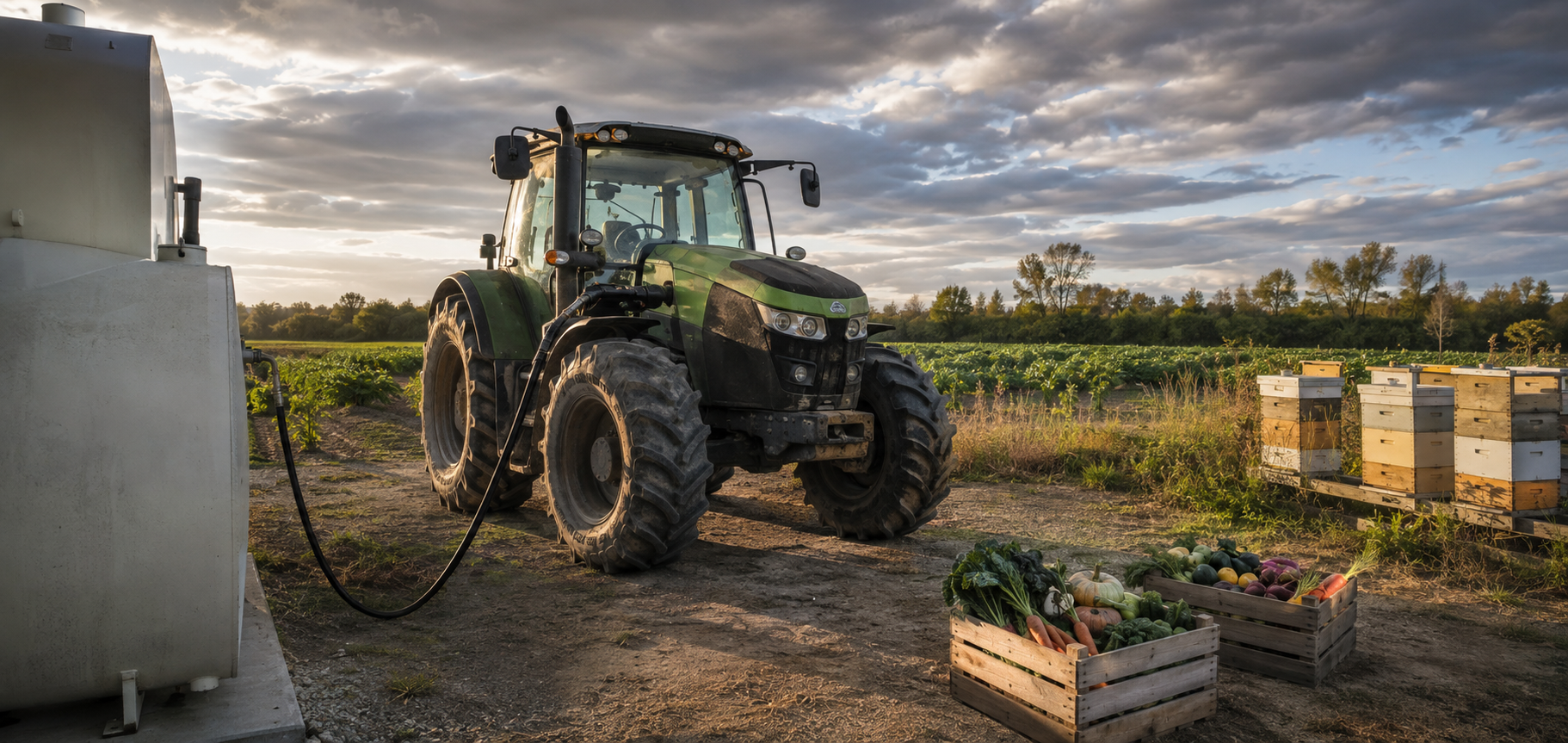
    Farm diesel remains historically expensive, and a Western Producer analyst says the market may not have reached its high. Bulk diesel delivered to a Saskatchewan farm was selling for about $1.65 per litre on August 20, after prices exceeded $2 per litre earlier this year.

    The pressure is coming less from crude oil itself than from a shortage of global refining capacity. Traffic through the Strait of Hormuz remains restricted, Russian refineries have been damaged, and Russia has shifted from exporting diesel to importing it. The risk is especially important during harvest, when farmers have little ability to reduce machinery use. The analyst’s advice is to remain well stocked instead of waiting for a quick price decline.

    My view: Tensions remain high in the Strait of Hormuz, keeping considerable pressure on petroleum products. Farmers have to manage the situation as best they can, even though cutting fuel consumption during harvest is difficult. Keeping tanks full is therefore probably the best strategy as long as tensions persist in the region.

    Read the Western Producer analysis

    Competition Bureau moves to block Green Giant acquisition

    Canada’s Competition Bureau has asked the Competition Tribunal to prevent Nortera Foods from acquiring B&G Foods Canada’s Green Giant and Le Sieur vegetable business. Nortera already sells canned and frozen vegetables under brands including Del Monte and Arctic Gardens.

    The Bureau says Nortera is already Canada’s dominant processor of certain canned and frozen vegetables. The deal would combine it with its only major national brand competitor in an already concentrated market, creating a risk of higher prices and fewer choices for grocery wholesalers and consumers. The Competition Tribunal will make the final decision.

    My view: I agree with the Competition Bureau. Grocery prices are rising faster than prices overall, making healthy competition essential. Agriculture also needs to preserve as many buyers as possible. Otherwise, prices will be controlled by an increasingly small number of companies, leaving farmers in a weaker bargaining position.

    Read the Competition Bureau release

    U.S. beekeepers say they did not seek the tariff on Canadian honey

    The United States has imposed a 50 per cent tariff on Canadian honey since August 22, but U.S. beekeeper representatives say they did not lobby for it. A former president of the American Honey Producers Association says Canadian honey accounts for too little of the market to be a priority for the organization.

    The United States imported about 11.8 million pounds of Canadian honey in 2025, only two per cent of its total honey imports. American producers say they are more concerned about volumes from Brazil, India and Argentina, along with adulterated honey. Their reaction undercuts the idea that the tariff answers an urgent industry demand and could remove a Canadian supplier just as the U.S. honey crop is expected to be weak.

    My view: This is another example of the Trump administration’s incompetence in managing its trade relationships. It behaves like a bully, using intimidation to impose its will instead of seeking a win-win solution.

    Related reading: Carney Takes Aim at U.S. Dairy, on Canada’s countermeasures in the broader trade conflict.

    Read the Western Producer report

  • Agricultural news for August 26, 2026: machinery, AgriStability and short-stature corn

    Agricultural news for August 26, 2026: machinery, AgriStability and short-stature corn

    Three stories stand out in Canadian agricultural news today. Most complete farm machines have been left off Canada’s counter-tariff list, Alberta is reopening late AgriStability enrolment after extreme rainfall, and short-stature corn is attracting attention ahead of its eventual Canadian release.

    Most farm machinery is excluded from Canada’s counter-tariffs

    Canada has announced counter-tariffs on C$27.6 billion worth of U.S. imports starting September 8. Despite early broad references to agricultural equipment, a closer look at the detailed list shows that most complete farm machines are not included.

    The measures appear to focus on certain combine parts, headers sold separately, baler parts, some mowing equipment, and selected trailers and conveyors. That detail reduces the risk of a broad price increase for U.S.-made tractors and farm machinery, although some purchases and replacement parts remain exposed.

    My perspective

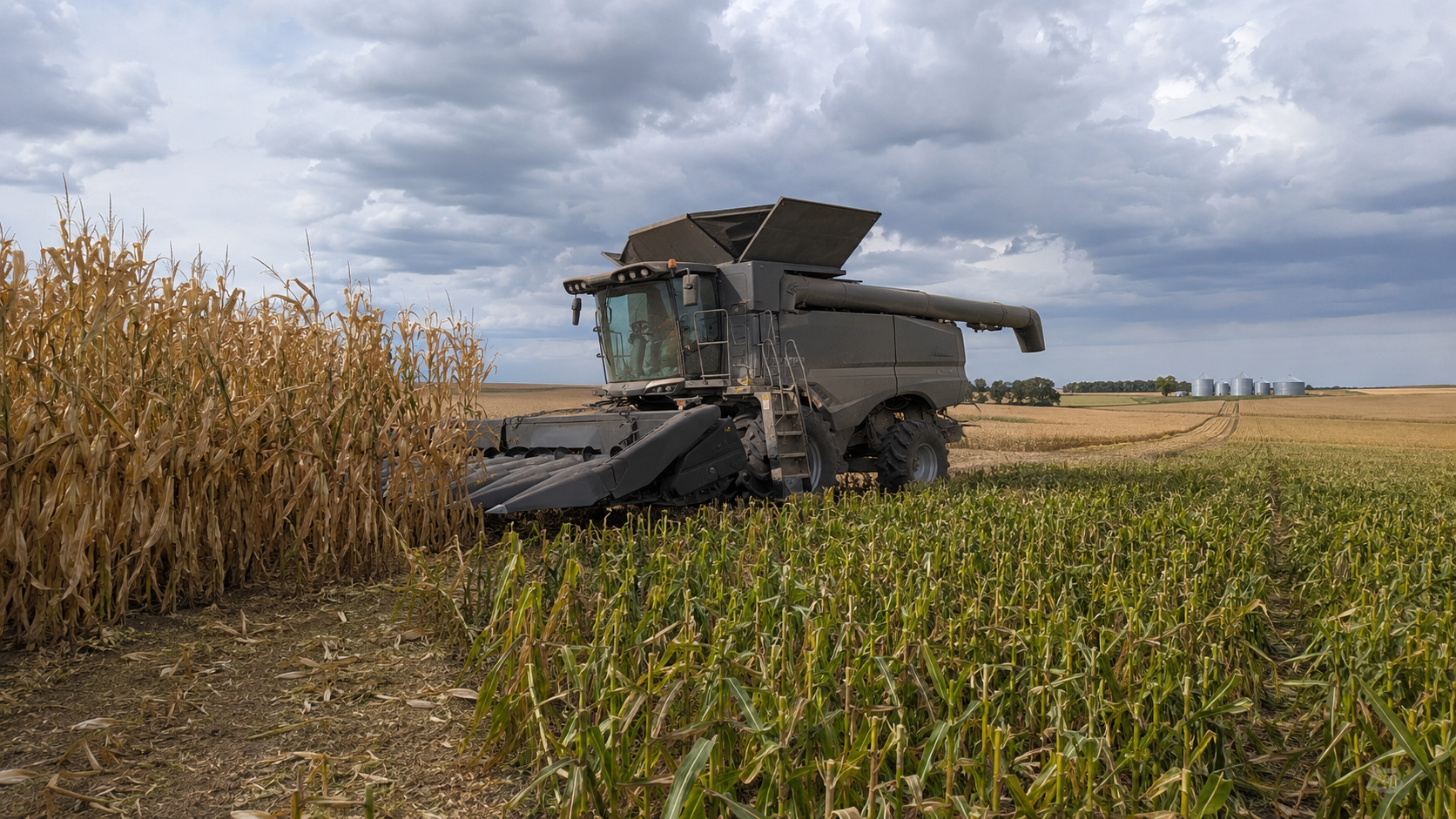
    Overall, this is good news. But with corn harvest season approaching, the impact on certain parts could still become a problem for Canadian farmers. When harvest time comes, delaying a combine repair simply is not an option. Every day counts.

    Read RealAgriculture’s detailed analysis
    Review the official list of affected products

    Alberta reopens AgriStability after extreme rainfall

    The governments of Canada and Alberta are allowing Alberta producers to enrol in AgriStability until October 1, 2026, even if they missed the April 30 deadline. The measure responds to excessive moisture that has kept some producers out of their fields and prevented essential farm work.

    The interim payment rate is also increasing from 50 to 75 per cent of the estimated final payment to get cash into affected farms sooner. Late enrolment, however, comes with a 20 per cent reduction in any eventual benefit.

    My perspective

    This is good news that will help support Alberta farmers affected by the extreme moisture. But they need to act quickly. The late-enrolment window closes on October 1.

    Read the Government of Alberta announcement

    Short-stature corn moves closer to the Canadian market

    Bayer is continuing Canadian development of its Preceon corn, whose plants stand about seven feet tall instead of more than ten feet for a conventional hybrid. The shorter architecture could support denser stands, reduce the volume of biomass passing through the combine and make late-season fertilizer or fungicide applications easier with ground equipment.

    The trait now sold in the United States is genetically engineered, but Bayer plans to market a Canadian version developed through conventional breeding using a naturally occurring trait. The company has provided no release date and says it will wait until the hybrids can deliver top-tier yields.

    My perspective

    I am very curious to see this corn. Its shorter stature should make it less vulnerable to storms and lodging. If higher plant populations can actually improve yields, that would be excellent. I also wonder whether a shorter plant might require fewer nutrients.

    I do not expect to see this type of hybrid in silage corn anytime soon, since silage production also depends on biomass. It would become much more interesting, however, if a higher plant population could produce a similar volume with a greater proportion of grain.

    Read the Farmtario article

  • Carney Takes Aim at U.S. Dairy

    Carney Takes Aim at U.S. Dairy

    U.S. dairy products entering Canada within our tariff-rate quotas could soon become significantly more expensive. Mark Carney’s government has announced a new round of countermeasures covering C$27.6 billion in U.S. imports, in response to tariffs imposed by Washington on Canadian goods.

    Starting September 8, Ottawa will impose tariffs of 15%, 25% or 50% on a long list of U.S. products. Dairy products are directly targeted, along with farm machinery and equipment, steel, appliances, pulp and paper products, and electronics.

    Imports within tariff-rate quotas are also targeted

    This is probably the most interesting detail for Canadian dairy farmers. The Department of Finance list does not target only imports above tariff-rate quota levels. Several tariff lines explicitly state that products imported within the access commitment will also face the new duties.

    Those quotas are at the heart of the market access granted to U.S. dairy products under CUSMA. I have already shown, using the trade data, that the United States already sells far more dairy products to Canada than Canada sells in return and that several quotas are not even fully used.

    For example, certain milk and cream powders containing no more than 1.5% milk fat will face an additional 50% tariff whether they enter within or above the access commitment. Several cheeses, including cheddar and other cheese categories, will face tariffs of 25%.

    In other words, Ottawa is not only targeting imports that already faced the high over-quota tariffs associated with supply management. It is also making part of the U.S. access to the Canadian market within those quotas more expensive.

    A possible effect on Canadian production

    If these tariffs make some U.S. dairy products less competitive in Canada, importers may reduce purchases from the United States. The missing volume would then have to be replaced elsewhere, including with more Canadian production where the product can be supplied domestically.

    For producers, this is therefore something worth watching closely. A real decline in imports could eventually translate into higher demand for Canadian milk and, depending on the scale of the shift, more incentive days or higher production requirements.

    Still, it would be a mistake to jump to conclusions too quickly. Tariff-rate quotas are not automatically filled to 100%, processors can change their sourcing, and the effect will vary by product. A tariff on imported cheese does not have exactly the same effect on Canadian milk demand as a tariff on milk powder.

    Farm equipment is also in the crosshairs

    Canada’s response does not only affect what farms produce. It also affects some of what farms buy. U.S.-made farm machinery and equipment are among the imports targeted by the counter-tariffs.

    For producers who need to replace a machine, buy a major part or invest in new equipment, these duties could have the opposite effect from those applied to dairy. Instead of protecting a Canadian market, they could raise the cost of a farm investment when the product comes from the United States.

    This is another part of the story that will need close attention in the coming months. A trade war can give with one hand and take with the other: lower U.S. dairy imports could support demand for Canadian milk while tariffs on machinery and equipment raise some production costs.

    A measure that may be temporary

    This is also the main reason for caution. These counter-tariffs are part of a trade conflict, not a permanent reform of Canadian dairy policy. Ottawa presents them as a direct response to U.S. tariffs and says its retaliation is meant to match the American measures.

    If the United States removes its own tariffs as part of a future agreement, Canada’s countermeasures could disappear as well. It would therefore be unwise for a farm to make long-term investment or expansion decisions today on the assumption that this added market protection will last for years.

    My view: this is an interesting development for dairy farmers. If some of the U.S. milk and dairy products currently entering Canada within our quotas become less competitive, Canadian production will probably have to increase to replace part of what no longer comes in. But I am not convinced this measure will be in place for very long. Before drawing conclusions about future production, we will need to watch actual import volumes very closely and, above all, follow how negotiations with the United States evolve. We will also need to watch the other side of the equation: if counter-tariffs make some U.S. farm equipment more expensive, part of the potential gain could show up in higher investment costs.

    An interesting political precedent

    For years, much of the trade debate around supply management has focused on the market access Canada must grant its trading partners within tariff-rate quotas. This time, the Canadian government is using that very access as leverage in its trade response.

    That is what makes this measure more interesting than just another round of tariffs between Ottawa and Washington. For once, the question is not only whether the United States will gain more access to the Canadian market. In the short term, Canada has instead made part of the existing U.S. access more expensive.

    The new duties are scheduled to take effect at 12:01 a.m. on September 8, 2026. From that point on, the most important number will be simple: do the targeted U.S. imports actually decline? If they do, that is when the impact on Canadian producers will start to become tangible.

    Sources: Department of Finance Canada, announcement of the countermeasures and official list of targeted products.

  • Agricultural news for August 24, 2026: cattle, crops and local slaughter rules

    Agricultural news for August 24, 2026: cattle, crops and local slaughter rules

    Three stories stand out today: Canada’s cattle herd is growing again, Quebec’s corn and soybean crops are shaping up well, and new provincial rules on local slaughter take effect this week.

    Canada’s cattle herd grows after several years of contraction

    According to estimates released by Statistics Canada on August 24, Canadian farms held 12.1 million cattle and calves on July 1, 2026, up 3.2% from one year earlier. Feeder cattle, slaughter cattle and calf prices had reached record highs during the first half of the year.

    The same report counted 14.0 million hogs, up 0.6% from July 1, 2025. The sheep breeding herd increased by 0.3% to 629,500 head.

    My view: this is a strong rebound in Canada’s cattle herd. If beef prices hold after the 90-day period during which the United States is easing access for ground beef imports, Canadian producers could find themselves in a favourable position. The question is whether that temporary window will have any lasting effect on prices or whether the market will remain tight enough to support this recovery.

    This ties directly into my analysis published this morning on the 300,000 tonnes of beef the United States plans to bring in over 90 days.

    Read Statistics Canada’s livestock estimates

    A very good corn and soybean harvest is taking shape in Quebec

    As harvest approaches, several field-crop advisers interviewed by La Terre de chez nous expect a good, and in some areas very good, corn and soybean crop across Quebec. Overall yield potential is viewed as slightly above average, despite some regional variability and localized issues such as dry conditions and sclerotinia.

    My view: it is always good news when we are told to expect strong harvests. The next question is what crops will look like across the rest of North America and, above all, whether prices will be there. Good yields alone do not guarantee a good year if abundant production across the continent puts downward pressure on markets.

    Read the report from La Terre de chez nous

    Local slaughter: the new rules take effect this week

    Quebec’s amendments to the Food Regulation take effect on August 29. The changes were already explained in detail in the August 15 agricultural news review. Among other changes, producers will be able to more easily market meat at retail from their own animals slaughtered at a local slaughterhouse, subject to the applicable permits and requirements. The rules also provide more flexibility for the layout of robotic milking systems.

    My view: this is positive news. By making local sales easier, these changes can help stimulate local economies and allow producers who choose this model to capture a little more income directly from what they produce.

    Read Quebec’s local agriculture strategy

  • 300,000 Tonnes of Beef in 90 Days: Can Trump Really Lower Hamburger Prices?

    300,000 Tonnes of Beef in 90 Days: Can Trump Really Lower Hamburger Prices?

    Donald Trump wants to bring down the price of ground beef in the United States quickly. To do it, his administration will allow up to 300,000 metric tonnes of products intended for ground beef to enter the country tariff-free for 90 days, beyond the volumes normally covered by U.S. import quotas.

    The president has also said the beef would be sold at 25% below current market prices. For now, however, several important details remain unclear: which countries will supply the beef, how the volumes will be allocated, which exporters will qualify, and exactly which products will be eligible.

    Why is U.S. beef so expensive?

    The underlying problem is fairly simple: the United States does not currently have enough cattle.

    As of July 1, 2026, USDA counted 28.5 million beef cows in the United States, down another 1% from a year earlier. The 2026 calf crop is also expected to decline, to 32.5 million head. At the same time, heifers kept for beef-cow replacement are up 3%, suggesting that herd rebuilding may finally be starting.

    But rebuilding a cattle herd cannot happen quickly. A heifer kept today must be raised, bred, calve, and then her calf must itself grow long enough to enter the beef supply chain. We are talking about years, not months.

    That is one reason the United States already imports enormous quantities of beef. In 2025, U.S. beef imports reached a record 5.47 billion pounds, and USDA projected roughly 5.68 billion pounds for 2026. Much of that imported product is lean beef used in U.S. ground beef production.

    Producers are pushing back

    American cattle producers have not exactly welcomed the announcement.

    Their argument is understandable. When supply is tight and prices rise, the market normally sends producers a signal: producing more becomes more attractive. In the cattle business, that can mean keeping more heifers for breeding instead of sending them into the beef supply chain.

    Some producer groups therefore argue that increasing imports precisely when prices are high could weaken the economic incentive needed to rebuild the U.S. herd.

    That argument deserves some nuance.

    Three months is a very short time in the life of a cow

    The announced measure lasts only 90 days.

    If this is genuinely a one-time, temporary measure, I would not change an entire breeding strategy because of it. A cattle producer deciding today whether to retain a heifer is making a decision based on conditions expected one, two, or three years from now, not simply on the price of beef over the next quarter.

    If producers believe the extra imports will disappear after 90 days and the U.S. cattle market will remain structurally tight, keeping replacement heifers still makes sense.

    The greater risk would come if producers begin to believe Washington will repeat the same intervention every time beef prices rise above a politically acceptable level. At that point, the issue is no longer 300,000 tonnes. It becomes the signal sent to the market: if prices rise too much, the government will step in to push them back down.

    That kind of expectation could affect long-term investment decisions.

    A lot of beef, but also a very large market

    Three hundred thousand tonnes is about 661 million pounds of beef. That is a large number.

    But the United States was already importing more than 5 billion pounds of beef per year before this announcement. The additional volume therefore amounts to roughly 12% of recent annual imports, concentrated into a three-month period.

    Will that be enough to create a major decline in the retail price of ground beef? That, to me, is the real unknown.

    The price will probably fall. Grocery stores may even run specials showing discounts in the neighbourhood of 25% for a while. But the idea that consumers will enjoy a lasting 25% reduction because imported beef itself is 25% cheaper is, to put it mildly, far-fetched.

    There are importers, processors, distributors and retailers between the imported product and the consumer. If a cheaper raw material enters the system, it does not follow that the entire saving will be passed along indefinitely. Before long, every link in the chain will have an opportunity to take a piece of the margin.

    The irony is hard to miss

    There is also a rather spectacular political irony here.

    The Trump administration regularly portrays government intervention in markets as socialism or even communism. Yet when American consumers face politically uncomfortable beef prices, Washington is directly changing import conditions in an attempt to force those prices lower.

    This is not a criticism of helping consumers. A temporary increase in imports may well ease some pressure at the grocery store. But it is still government intervention in the market, and a fairly explicit one.

    The contrast is especially striking given how often the United States criticizes agricultural market-management systems elsewhere, including in Canada.

    Consumers now, producers later

    This episode illustrates a broader agricultural dilemma.

    Everyone wants farmers to be profitable, right up until that profitability translates into food prices consumers find too high.

    High prices are also the mechanism by which a market encourages more production. In cattle, however, the biological response is painfully slow. Consumers buy hamburger this week; producers make herd decisions measured in years.

    Washington has clearly chosen to address the first problem immediately.

    Whether 300,000 tonnes will meaningfully change what Americans pay at the meat counter remains to be seen.

    And once the 90 days are over, the underlying problem may look exactly the same as it did before: the United States still does not have enough cattle.

  • Lactalis in Canada: Good or Bad News for the Dairy Industry?

    Lactalis in Canada: Good or Bad News for the Dairy Industry?

    In less than a month, Lactalis has made two moves that deserve the attention of Canada’s dairy sector. On July 15, the French giant reached an agreement to acquire Agropur’s fine-cheese business, including the OKA, Monsieur Gustav and L’Extra brands and the plants in Oka and Saint-Hyacinthe. Then, on August 14, Lactalis announced a £988 million deal, about US$1.34 billion, to buy Saputo’s British dairy operations.

    Two different transactions on two continents. But together they illustrate something much bigger: the rise of Lactalis in Canada is part of a global growth strategy, and Canada is clearly one of the markets where the group wants a larger presence.

    So for Canadian dairy farmers, is that good news or bad news?

    Lactalis in Canada: a giant that is actually investing

    It would be too simplistic to describe Lactalis as a foreign company merely taking Canadian market share. The group already has a substantial industrial presence in this country.

    According to Lactalis Canada, the company operates 19 manufacturing sites in Canada, employs about 4,500 people and processes roughly 2.2 billion litres of 100% Canadian milk. Since 2018, it also says it has invested more than $900 million in capital projects and transformation initiatives in Canada.

    Its portfolio already includes extremely familiar brands: Cracker Barrel, Black Diamond, P’tit Québec, Balderson, Ficello, Astro, IÖGO, Olympic, Lactantia, Beatrice, Galbani and Président, among others. If the acquisition of Agropur’s fine-cheese business receives Competition Bureau approval, OKA, Monsieur Gustav and L’Extra will be added to that list.

    From a dairy farmer’s perspective, there is an obvious positive argument here. A company that invests in Canadian plants and processes milk produced here is far more useful to our sector than growth based simply on importing finished dairy products.

    But how large do we want Lactalis to become?

    The downside is concentration.

    Lactalis is not simply a large processor. The group describes itself as the world’s leading dairy company, with 2025 revenue of €31.2 billion, 266 dairies and cheese plants in 49 countries and 124 acquisitions completed over twenty years.

    Acquisitions are therefore a core part of its strategy.

    In Canada, that strategy has already reshaped the dairy aisle. When Parmalat, now Lactalis Canada, acquired Kraft Heinz’s natural-cheese business, the Competition Bureau noted that the main competitors in regular grocery-store cheese were essentially Parmalat and Kraft Heinz, Saputo with Armstrong, and retailers’ private labels.

    The Bureau ultimately cleared that transaction in 2019, concluding that it was unlikely to substantially lessen competition. But each new acquisition gradually changes the landscape. The proposed purchase of OKA and Agropur’s other fine-cheese assets is itself expressly subject to Competition Bureau approval.

    The real question is not whether Lactalis is “too big” simply because it is foreign. The question is at what point the concentration of brands, plants and processing capacity in one group’s hands begins to reduce meaningful competition. That issue of market power in the dairy chain also connects directly to the debate over farm-gate prices, processing and the supposedly free dairy market.

    The Agropur case is especially sensitive

    When market share moves from Saputo to Lactalis, it is essentially a transfer between two private companies processing Canadian milk.

    Agropur is different. Agropur is owned by its dairy-farmer members. A business held by the cooperative therefore allows farmers, at least in principle, to participate more directly in the value created beyond the farm gate.

    Seeing a producer-owned cooperative sell iconic brands such as OKA to a multinational can therefore create perfectly legitimate discomfort.

    But Agropur’s own strategy also matters. The cooperative says its fine-cheese operations were profitable, but represented only about 2% of consolidated revenue and 2% of the milk processed in its Canadian plants. Agropur says it wants to focus investment on value-added fluid milk, industrial cheese, butter and dairy ingredients.

    A few months before announcing the fine-cheese sale, Agropur unveiled investment projects approaching $1 billion in Beauceville, Quebec, and Bedford, Nova Scotia, to expand its capacity in value-added dairy proteins. Those projects still require final approval, but they suggest the cooperative is not abandoning the Canadian market. It is choosing where to concentrate its capital.

    What about Saputo’s sale in the United Kingdom?

    The agreement announced August 14 for Saputo’s British dairy operations is striking in size: £988 million. More than anything, it demonstrates Lactalis’s financial strength and appetite for acquisitions on a global scale.

    It would be risky, however, to conclude that Saputo is selling in the United Kingdom because it expects an imminent battle with Lactalis in Canada. There is currently no public evidence establishing that connection.

    The broader hypothesis remains interesting: in an increasingly concentrated global industry, major processors are choosing their markets and product categories with greater discipline. Some assets are sold to free up capital while other sectors receive large investments.

    What we can say with confidence is that Lactalis is currently on the buying side.

    Supply management does not answer this question

    This development also highlights a distinction that is sometimes overlooked in debates about supply management and the pressures facing Canada’s dairy market.

    Supply management is primarily designed to govern milk production, farm-gate pricing and access to the Canadian market. It does not guarantee that the companies processing that milk are Canadian-owned, much less farmer-owned.

    It is entirely possible to maintain strong Canadian milk production under supply management while seeing a growing share of brands and processing capacity owned by large international groups.

    That is not automatically a bad thing. A global processor can bring capital, technology, market access and marketing capacity that smaller companies may not have. But ownership of processing also influences where profits end up and who holds bargaining power in the food chain.

    So, good news or bad news?

    Probably both.

    For Canadian dairy farmers, Lactalis can be good news when it invests here, modernizes plants and grows sales using Canadian milk. The company has the financial resources to support its brands against powerful retailers, develop new products and compete with other global giants.

    But Lactalis’s growth becomes a concern when it steadily reduces the number of major independent processors and concentrates ever more brands and production capacity in the same hands.

    The problem may therefore not be Lactalis itself. It is the speed at which the global dairy sector is consolidating.

    For Agropur and Saputo, the recent transactions may be perfectly rational portfolio decisions. For Lactalis, they clearly fit a growth strategy that has been unfolding for decades.

    And for us as dairy farmers, the issue deserves close attention. We benefit from having strong processors capable of investing and selling our products. But we also benefit from having enough of them that no single company becomes indispensable.

    Sources
  • The Problems With Dairy Quota

    The Problems With Dairy Quota

    Before getting into this, I want to make one thing clear: I am absolutely not opposed to supply management. It is a useful system that supports a major pillar of Canadian agriculture, with effects that extend beyond dairy alone. I will not get into poultry or eggs because those are not sectors I know well.

    That does not prevent me from taking a critical look at the system. At its core, supply management helps preserve the dairy sector by ensuring that production within allocated limits has a market. But it also has major flaws that, in my view, need to be named.

    Three important problems

    I have identified three issues that deserve serious attention:

    • the $24,000 quota price ceiling;
    • the right not to produce quota that is held;
    • the lack of, and opposition to, a quota-rental mechanism.

    I will explain why I think each of these creates problems and suggest ways they could be addressed. I am not going to change the system by myself. Dairy Farmers of Quebec and the Canadian dairy organizations function democratically. By throwing this small stone into the pond, I hope to contribute to the discussion.

    The $24,000 price ceiling

    The ceiling on the price of one kilogram of quota was set at $25,000 jointly by Quebec and Ontario in 2010. The goal was to limit price increases in an asset that was, and still is, a barrier to entering dairy production. A few years later, in 2016, the price was lowered to $24,000 per kilogram following changes that transferred non-saleable quota into saleable quota and diluted its value.

    Although a price cap may sound reasonable, it produces unwanted side effects.

    Basic economic principles tell us that a price ceiling increases demand in a market where supply is limited. Leaving that ceiling unindexed over time makes the problem even worse. If the price had merely tracked inflation since 2016, it would now be around $31,000 per kilogram. Had it been indexed from the start in 2010, it would be above $35,000.

    That is one reason why farms can now buy only tiny fractions of a kilogram of quota in many monthly exchanges. Supply remains structurally below demand. Which leads to the second problem.

    The right not to produce

    Many dairy farms want to expand. New barns are built, old ones are renovated and better production methods are adopted. Even with the same number of cows, milk output can increase, and with it the need for quota that allows that additional production to be marketed.

    While Quebec dairy producers collectively have an obligation to fill the production target allocated to the province, an individual farm can accumulate quota without producing it.

    The explanation is straightforward. Because farms can often buy only fractions of a kilogram each month, a business planning an expansion starts accumulating production rights years in advance. Over time, a farm can build up 10, 20 kilograms or more before the project is ready.

    Across Quebec, hundreds of kilograms can therefore sit in reserve without being produced. I do not blame the farms that make that choice. Who is going to invest millions in a new building that could sit partly empty for months because quota is unavailable?

    There is also a certain amount of quota that remains unproduced for other reasons. Consecutive increases in production rights have followed growth in overall Canadian demand for milk and dairy products. Some farms keep those rights in anticipation of future projects, while others simply leave them unused.

    The lack of a rental mechanism

    There is essentially one way to trade dairy quota: buying and selling. Most provinces participating in the system do not allow ordinary rental, although some temporary transfers are possible.

    A farm that accumulates quota for a future expansion can therefore end up holding a significant amount of dormant production rights in its asset portfolio. One unintended consequence is that extra quota may need to be issued collectively to make sure Quebec reaches its production target.

    Large sums of money are frozen in the system. Ten kilograms of quota represent $240,000 tied up in an asset that produces no milk revenue and no interest income. Worse, inflation slowly erodes the real value of that capital.

    There are several arguments against rental. Some are valid, while others strike me as more self-interested. Two of the most common are:

    • the fear that farms would buy quota solely to rent it out;
    • the concern that rental would financially reward poor producers.

    Rental rules could be designed to prevent quota from being purchased purely as a rental investment. It could be limited to a percentage of quota owned, or permitted only for a defined period when a producer is accumulating quota for a major expansion.

    I do not find the second objection convincing. If a producer, good or bad, can rent out part of an unused production right, that can benefit the system as a whole. Dormant quota is finally put back into production.

    My proposals

    The price ceiling

    It is long past time to start indexing the price of dairy quota more aggressively. Every year we fail to do so makes the imbalance worse. If the ceiling increased modestly each year, slightly above the previous year’s inflation rate, the system could begin catching up. Accumulating quota far in advance would gradually become less attractive, and the quantities allocated in each monthly exchange could increase. Buying years ahead would lose some of its appeal, and more quota purchased would actually be produced.

    The right not to produce

    Not producing quota should become a temporary situation, not a structural outcome. We collectively have an obligation to fill our production target, and that should ultimately be reflected at the farm level.

    Above a certain percentage of unproduced quota, that production right could be temporarily redistributed across farms. Not confiscated, not forcibly sold, simply redistributed until the owner is ready to use it.

    Or we eventually move to the final option.

    Allow rental

    I understand why many farms hold dormant quota. As explained above, they are preparing expansions. The other cases likely represent a smaller share of the unproduced total.

    A farm preparing an expansion and buying quota in advance should be able, for a limited period, to rent out that production right. Not partially, not for a few days here and there. Rent it out fully, then take it back when the farm is ready.

    There are farms ready to produce but constrained by the system. There are quotas sitting idle for months or years that could be used immediately. Leaving production rights dormant because of ideological rigidity is harmful to everyone.

    Naming the blind spots

    The dairy quota system is neither absurd nor something that should be discarded. It has delivered remarkable stability in a sector that, elsewhere, has often been sacrificed to market volatility. But that very strength makes its rigidities harder to correct.

    The frozen price ceiling, the right not to produce and the inability to rent are not isolated anomalies. Together, they protect quota value while restricting its circulation and use. Until those blind spots are named clearly, the same debates will keep coming back without ever being resolved.

    Thinking about these issues is not an attack on supply management. It is a way of taking its long-term future seriously. A durable system must be able to adapt, not only under pressure from crises, but through a clear-eyed look at its own limits.

  • Sylvain Charlebois vs. Supply Management: The Free Market He Is Selling Does Not Exist

    Sylvain Charlebois vs. Supply Management: The Free Market He Is Selling Does Not Exist

    Sylvain Charlebois deserves credit for forcing a debate about supply management. But by increasingly portraying it as the near-universal cause of the dairy sector’s problems, he ends up selling Canadians a solution, the “free market,” that barely exists anywhere in the global dairy industry.

    For years, the Dalhousie University professor has described supply management as a rigid, opaque system that is costly for consumers and responsible for the decline in the number of dairy farms. In his more recent columns, the language has become even harsher. He argues that the system is “killing” Canada’s dairy sector, isolating the country and protecting a comfortable rent for producers.

    That language is effective. It creates an easy villain. But it greatly oversimplifies a much more complex economic reality and consistently minimizes the central question: what would actually happen if Canada abandoned supply management?

    The farm-gate price is not the grocery-store price

    One of the most persistent shortcuts in this debate is to directly associate supply management with the price paid by consumers. Yet the federal government itself notes that, in dairy, it is the price paid to farmers that is regulated. With a few provincial exceptions for fluid milk, retail dairy prices are not regulated.

    Between the farm and the shelf are processing, packaging, transportation, distribution and retailer margins. Presenting the farm-gate price as the main barrier to affordability therefore shifts attention away from the rest of the chain, precisely where corporate concentration and market power are often strongest.

    Supply management is not a blank cheque handed to farmers. The milk price is based in part on a national cost-of-production survey. The objective is to allow an efficient farm to cover its costs and earn reasonable compensation rather than forcing farm families to absorb every market collapse on their own.

    The disappearance of farms is not proof against the system

    Sylvain Charlebois often points to the decline in the number of dairy farms in Canada since supply management was introduced. The number is real. The conclusion he draws from it is much less convincing.

    Consolidation is also happening in the United States, where there is no Canadian-style supply management. The U.S. Department of Agriculture has long documented dairy production becoming concentrated in fewer, larger operations attracted by lower unit costs. Mechanization, rising milk yield per cow, building costs, labour shortages and succession challenges are reshaping agriculture across developed countries.

    We can certainly debate quota prices, access for young farmers or whether the system encourages enough innovation. But blaming consolidation on supply management confuses a global trend with a uniquely Canadian policy.

    The dairy “free market” is heavily supported by government

    This is the biggest blind spot in Charlebois’s argument. U.S. dairy farmers are not simply left to market forces. They have access to the federal Dairy Margin Coverage program, which makes payments when the margin between milk prices and feed costs falls below certain levels. For 2026, the USDA forecast includes significant payments under this program.

    The European Union also monitors its dairy market, provides direct payments through the Common Agricultural Policy and retains public intervention and private-storage mechanisms to respond to imbalances. When prices collapse, governments intervene. When surpluses accumulate, they buy, store, subsidize or compensate.

    The Canadian difference is therefore not that Canada supports farmers while everyone else lets the market operate freely. It is that Canada organizes production around domestic demand and relies more heavily on market revenue, instead of periodically socializing losses through public programs.

    Charlebois’s own report contradicts some of his harshest claims

    Perhaps the most convincing criticism of his recent columns can be found in his own 2020 report, Supply Management 2.0, published with colleagues from Dalhousie University and the University of Guelph.

    The report says that immediate dismantling is not a viable solution. It acknowledges that U.S. milk could flood the Canadian market, that the domestic industry could become dependent on imports and that consumers could even end up paying more after the system was abolished. Most importantly, the report recognizes that a solution that appears efficient in a pure free-market model is not necessarily optimal when farm livelihoods, rural economies and Canadian values are considered.

    Those nuances matter. Yet they are often missing when Charlebois now says supply management is “killing” the sector or damaging Canada’s international credibility. Between the academic analysis and the public columns, conditional language often disappears in favour of a punchier slogan.

    Transparency can improve, but it is not nonexistent

    Charlebois is right about one thing: a system that organizes a national market has to continually earn public trust. Pricing mechanisms, quota decisions and the effects of trade policy need to be explained in much more accessible language. Farm organizations have sometimes spoken mainly to their members, leaving opponents to define the system for the broader public.

    But calling the system opaque as though its rules were secret is excessive. The Canadian Dairy Commission is a Crown corporation accountable to Parliament. Prices, formulas, adjustments and decisions are governed by public laws and regulations. Producer organizations also point out that pricing formulas include production costs and inflation measures and that changes are publicly announced.

    More transparency and better communication should be demanded. But the need for improvement should not be turned into an accusation of a hidden rent.

    Reform does not require dismantling

    Supply management is not perfect. The cost of entry for new farmers is real. Rules can slow some forms of innovation. Successive trade concessions have made the system more complex. Farmers also have to respond clearly to expectations around animal welfare, the environment and productivity.

    But none of those criticisms proves that Canada would be better off fully exposing domestic production to subsidized surpluses from neighbouring countries and then replacing market stability with government payments whenever prices collapse.

    The debate Sylvain Charlebois is pushing deserves better than his own slogans. Yes, supply management must evolve. Yes, it should be more transparent and better adapted to the next generation. No, it is not the sole cause of every problem in Canadian dairy. And no, dismantling it would not magically give consumers cheaper milk, farmers higher incomes and Canada new export markets.

    In a world where major agricultural powers subsidize, protect and intervene heavily, keeping a system that aligns production with demand is not a rejection of economics. It is an agricultural-policy choice. It can be criticized. But before condemning it, we should compare this real system with the real systems used elsewhere, not with an imaginary free market.

    Since then, Sylvain Charlebois has put forward ten “myths” about supply management. I examined them one by one in my detailed analysis of his ten supply-management myths.

    Further reading on supply management

    Sources

    Photo: Janvez, Wikimedia Commons, CC BY-SA 4.0.