Category: Agriculture

  • Agricultural news for August 29, 2026: Pakistan returns to Canadian canola

    Agricultural news for August 29, 2026: Pakistan returns to Canadian canola

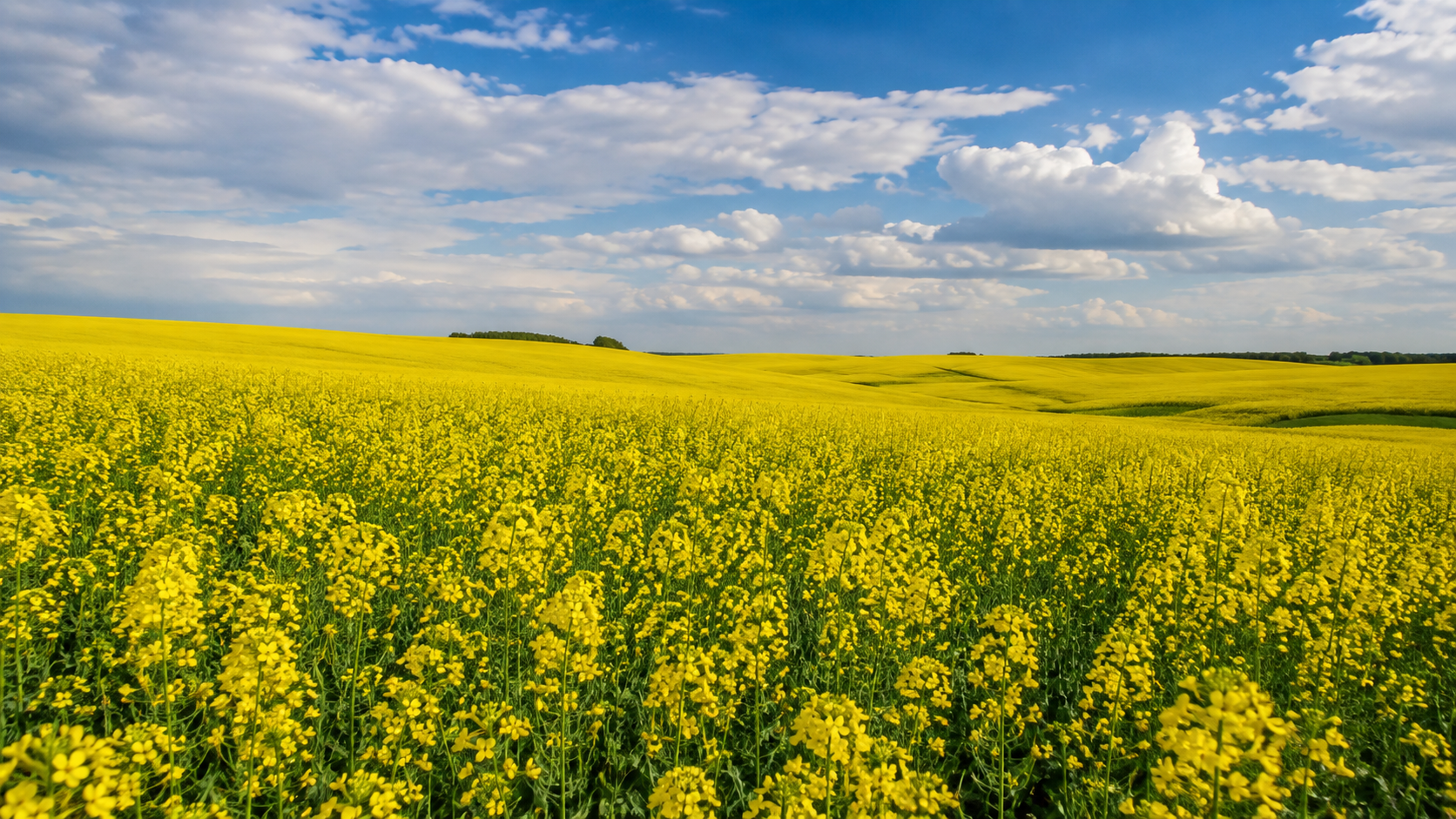
    Pakistan has returned as a significant buyer of Canadian canola after regulatory changes had largely closed that market for several years. The renewed trade adds a useful outlet at a time when Canada is preparing to handle another very large crop while directing more seed into domestic crushing.

    Pakistan is buying Canadian canola again

    Pakistan purchased 506,656 tonnes of Canadian canola during the first six months of 2026, according to figures reported by Farmtario. That compares with 165,128 tonnes in all of 2025 and no purchases in 2023 or 2024.

    The country now ranks as Canada’s fifth-largest canola customer this year, behind China, the European Union, Japan and Mexico. Access had been constrained while Pakistan revised its import requirements for genetically modified crops. The regulatory framework was updated in late 2025, and Canada and Pakistan signed a new phytosanitary protocol in July 2026.

    The reopened market matters because Pakistan can absorb meaningful volumes. Its purchases have varied considerably in the past, reaching 1.35 million tonnes in 2016. Restoring predictable access does not guarantee trade at that level, but it gives Canadian exporters another substantial destination and reduces their dependence on a smaller group of buyers.

    From my perspective, this is very good news for Canadian agriculture. Canadian canola is not currently facing tariffs, but I still think diversifying our export markets is necessary. The more buyers we have, the less exposed the sector is to a sudden change in trade policy or access in any one market.

    A large crop will meet stronger domestic processing

    Agriculture and Agri-Food Canada forecasts 2026 canola production at 21.6 million tonnes, the second-largest crop on record and 15 per cent above the five-year average. Total supply is projected at 23.46 million tonnes.

    The department expects domestic crush to reach a record 13.7 million tonnes as processing capacity expands. Exports are forecast at 8 million tonnes, down 12 per cent from 2025-26 because more seed is expected to remain in Canada for processing. Despite the large supply, ending stocks are projected to fall 13 per cent to 1.5 million tonnes, notably below the five-year average.

    Pakistan’s return therefore arrives at a useful moment. It provides another market for a large crop, while rising domestic crush keeps the overall balance from becoming burdensome. The durability of this trade will depend on predictable access, competitive prices and Pakistan’s willingness to keep buying beyond the current year.

    Sources: Farmtario; Agriculture and Agri-Food Canada.

  • Agricultural news for August 28, 2026: soybeans, ag tech and canola

    Agricultural news for August 28, 2026: soybeans, ag tech and canola

    Today’s agricultural news is focused on improving the path from research to commercial use. Soybean researchers are refining the diagnosis of hidden nutrient problems, Ottawa is renewing a major agricultural technology fund, and Prairie canola growers will see a practical change in how Pioneer packages seed for the 2027 season.

    Hidden nutrient problems may be limiting soybean yields

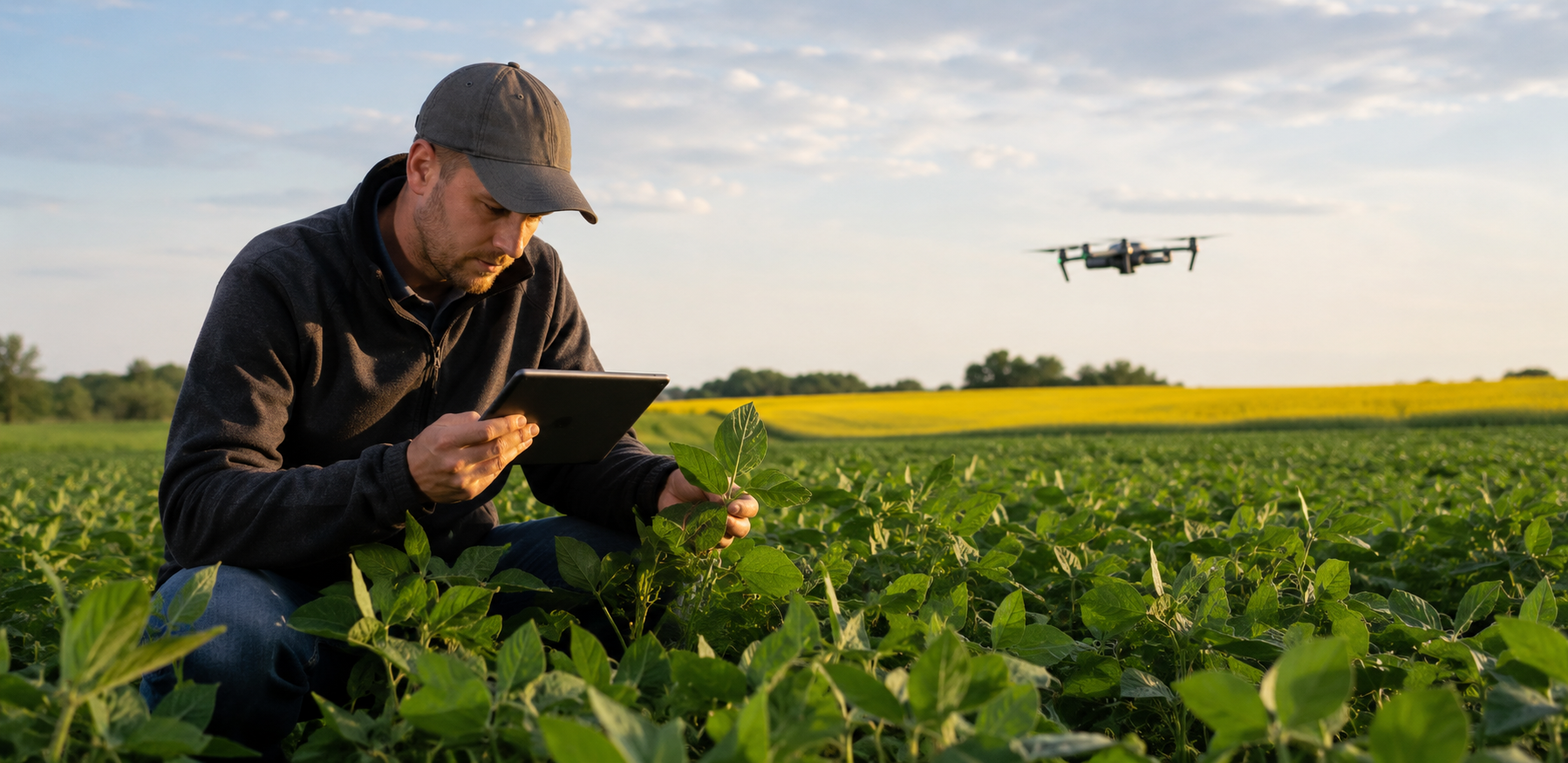
    University of Guelph researchers are working to establish critical tissue-test levels for boron, iron, manganese and zinc in soybeans. Their longer-term goal is to develop an artificial intelligence tool that could identify micronutrient deficiencies before symptoms become visible.

    Early work suggests both deficiencies and toxicities can reduce crop performance without obvious visual warning signs. Researcher Hugh Earl recommends confirming suspected problems with tissue testing and leaving an untreated check strip when applying a corrective product. Applying micronutrients preventively without a diagnosis can waste money and may create toxicity.

    The team is also studying how drought affects biological nitrogen fixation. In controlled trials with low soil nitrogen, successful nodulation improved soybean yield under both adequate moisture and severe drought. More evidence is still needed before these findings can be turned into broad commercial recommendations.

    Read the Farmtario article

    Ottawa renews $50 million for agricultural technology

    The federal government is providing another $50 million to the Canadian Agri-Food Automation and Intelligence Network. CAAIN will use the funding to support new innovation projects, expand its smart-farm network and continue its operations.

    Created in 2019, the non-profit funds the development and adoption of technology intended to improve farm productivity, profitability or sustainability. CAAIN says it has invested $36 million in 51 projects, supported 885 jobs and helped generate more than 100 intellectual property assets. Those projects have attracted more than $500 million in follow-on private investment.

    Thirty projects have completed their funding cycles and some have already reached the market. The real test for the renewed program will be whether it can move more Canadian technologies beyond trials and into tools that farmers can afford and use under commercial conditions.

    My view: This investment matters. It will strengthen Canada’s capacity for innovation and help make our agricultural sector more competitive.

    Read the Farmtario article

    Pioneer will sell canola seed by seed count in 2027

    Pioneer is changing all of its Canadian canola products from weight-based packaging to a minimum seed count for the 2027 growing season. Each bag will contain at least 4.25 million seeds, which the company estimates is enough for approximately 10 acres.

    Bags will carry an A-to-E seed-size classification, while total bag weight will remain on the label so growers can adjust seeding rates for field conditions. The shift should make acreage planning and inventory easier because the amount purchased will correspond more directly to the target plant population.

    The change also makes price comparisons more meaningful when seed size varies. A bag with a known number of seeds removes some of the uncertainty created when two bags of equal weight contain different seed counts, although establishment and final plant stand will still depend on germination, mortality and seeding conditions.

    My view: This will be very practical when calibrating seeders. Knowing the exact number of seeds in each bag makes it possible to calculate precisely how much seed is needed for a given acreage.

    Read the RealAgriculture article

  • Agricultural news for August 27, 2026: diesel, vegetables and honey

    Agricultural news for August 27, 2026: diesel, vegetables and honey

    Input costs and food-sector competition lead today’s agricultural news. Farmers are being warned that already elevated diesel prices may rise further, Canada’s Competition Bureau is trying to stop a major vegetable-brand acquisition, and U.S. beekeepers say they did not ask for the new tariff on Canadian honey.

    Farm diesel prices may have further to climb

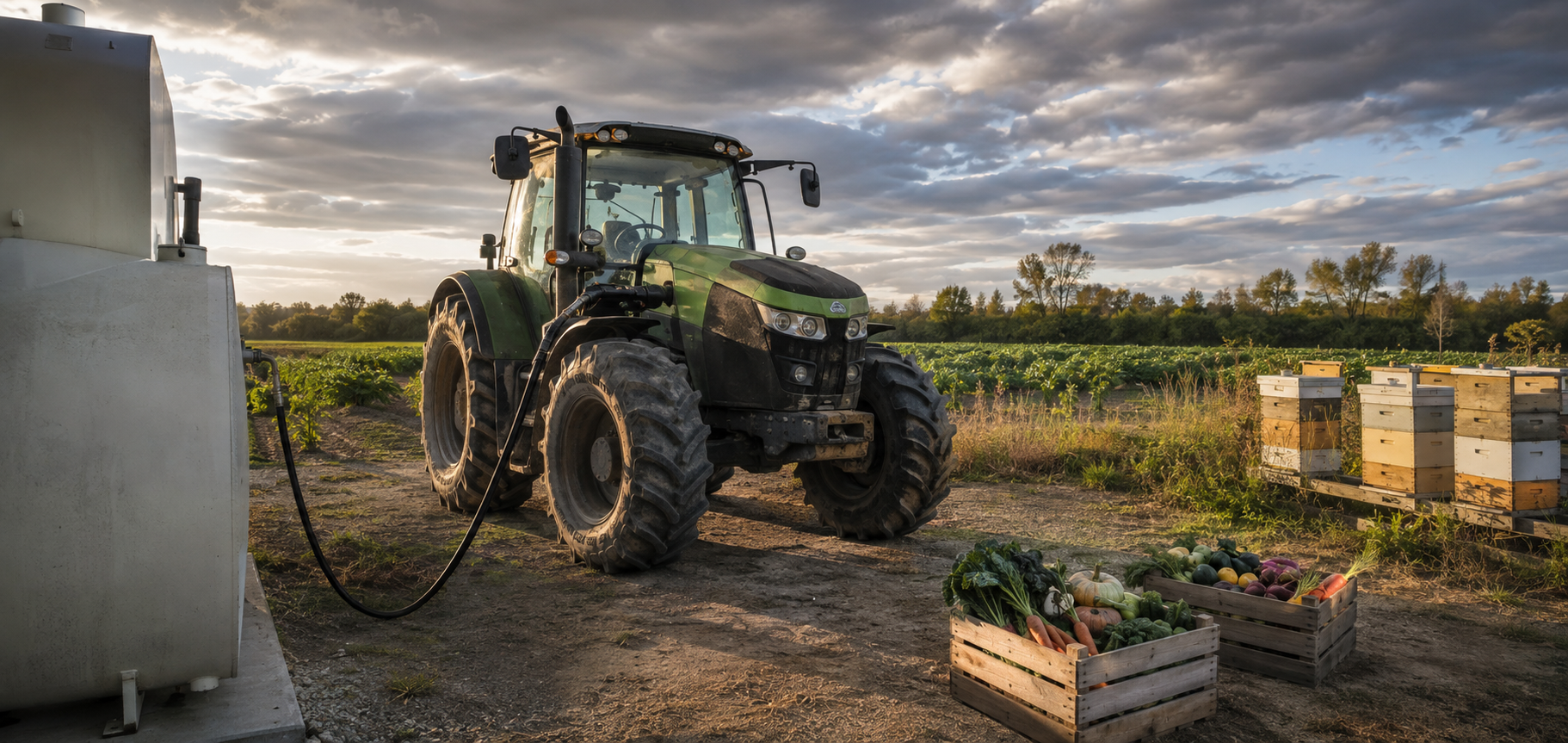
    Farm diesel remains historically expensive, and a Western Producer analyst says the market may not have reached its high. Bulk diesel delivered to a Saskatchewan farm was selling for about $1.65 per litre on August 20, after prices exceeded $2 per litre earlier this year.

    The pressure is coming less from crude oil itself than from a shortage of global refining capacity. Traffic through the Strait of Hormuz remains restricted, Russian refineries have been damaged, and Russia has shifted from exporting diesel to importing it. The risk is especially important during harvest, when farmers have little ability to reduce machinery use. The analyst’s advice is to remain well stocked instead of waiting for a quick price decline.

    My view: Tensions remain high in the Strait of Hormuz, keeping considerable pressure on petroleum products. Farmers have to manage the situation as best they can, even though cutting fuel consumption during harvest is difficult. Keeping tanks full is therefore probably the best strategy as long as tensions persist in the region.

    Read the Western Producer analysis

    Competition Bureau moves to block Green Giant acquisition

    Canada’s Competition Bureau has asked the Competition Tribunal to prevent Nortera Foods from acquiring B&G Foods Canada’s Green Giant and Le Sieur vegetable business. Nortera already sells canned and frozen vegetables under brands including Del Monte and Arctic Gardens.

    The Bureau says Nortera is already Canada’s dominant processor of certain canned and frozen vegetables. The deal would combine it with its only major national brand competitor in an already concentrated market, creating a risk of higher prices and fewer choices for grocery wholesalers and consumers. The Competition Tribunal will make the final decision.

    My view: I agree with the Competition Bureau. Grocery prices are rising faster than prices overall, making healthy competition essential. Agriculture also needs to preserve as many buyers as possible. Otherwise, prices will be controlled by an increasingly small number of companies, leaving farmers in a weaker bargaining position.

    Read the Competition Bureau release

    U.S. beekeepers say they did not seek the tariff on Canadian honey

    The United States has imposed a 50 per cent tariff on Canadian honey since August 22, but U.S. beekeeper representatives say they did not lobby for it. A former president of the American Honey Producers Association says Canadian honey accounts for too little of the market to be a priority for the organization.

    The United States imported about 11.8 million pounds of Canadian honey in 2025, only two per cent of its total honey imports. American producers say they are more concerned about volumes from Brazil, India and Argentina, along with adulterated honey. Their reaction undercuts the idea that the tariff answers an urgent industry demand and could remove a Canadian supplier just as the U.S. honey crop is expected to be weak.

    My view: This is another example of the Trump administration’s incompetence in managing its trade relationships. It behaves like a bully, using intimidation to impose its will instead of seeking a win-win solution.

    Related reading: Carney Takes Aim at U.S. Dairy, on Canada’s countermeasures in the broader trade conflict.

    Read the Western Producer report

  • Agricultural news for August 26, 2026: machinery, AgriStability and short-stature corn

    Agricultural news for August 26, 2026: machinery, AgriStability and short-stature corn

    Three stories stand out in Canadian agricultural news today. Most complete farm machines have been left off Canada’s counter-tariff list, Alberta is reopening late AgriStability enrolment after extreme rainfall, and short-stature corn is attracting attention ahead of its eventual Canadian release.

    Most farm machinery is excluded from Canada’s counter-tariffs

    Canada has announced counter-tariffs on C$27.6 billion worth of U.S. imports starting September 8. Despite early broad references to agricultural equipment, a closer look at the detailed list shows that most complete farm machines are not included.

    The measures appear to focus on certain combine parts, headers sold separately, baler parts, some mowing equipment, and selected trailers and conveyors. That detail reduces the risk of a broad price increase for U.S.-made tractors and farm machinery, although some purchases and replacement parts remain exposed.

    My perspective

    Overall, this is good news. But with corn harvest season approaching, the impact on certain parts could still become a problem for Canadian farmers. When harvest time comes, delaying a combine repair simply is not an option. Every day counts.

    Read RealAgriculture’s detailed analysis
    Review the official list of affected products

    Alberta reopens AgriStability after extreme rainfall

    The governments of Canada and Alberta are allowing Alberta producers to enrol in AgriStability until October 1, 2026, even if they missed the April 30 deadline. The measure responds to excessive moisture that has kept some producers out of their fields and prevented essential farm work.

    The interim payment rate is also increasing from 50 to 75 per cent of the estimated final payment to get cash into affected farms sooner. Late enrolment, however, comes with a 20 per cent reduction in any eventual benefit.

    My perspective

    This is good news that will help support Alberta farmers affected by the extreme moisture. But they need to act quickly. The late-enrolment window closes on October 1.

    Read the Government of Alberta announcement

    Short-stature corn moves closer to the Canadian market

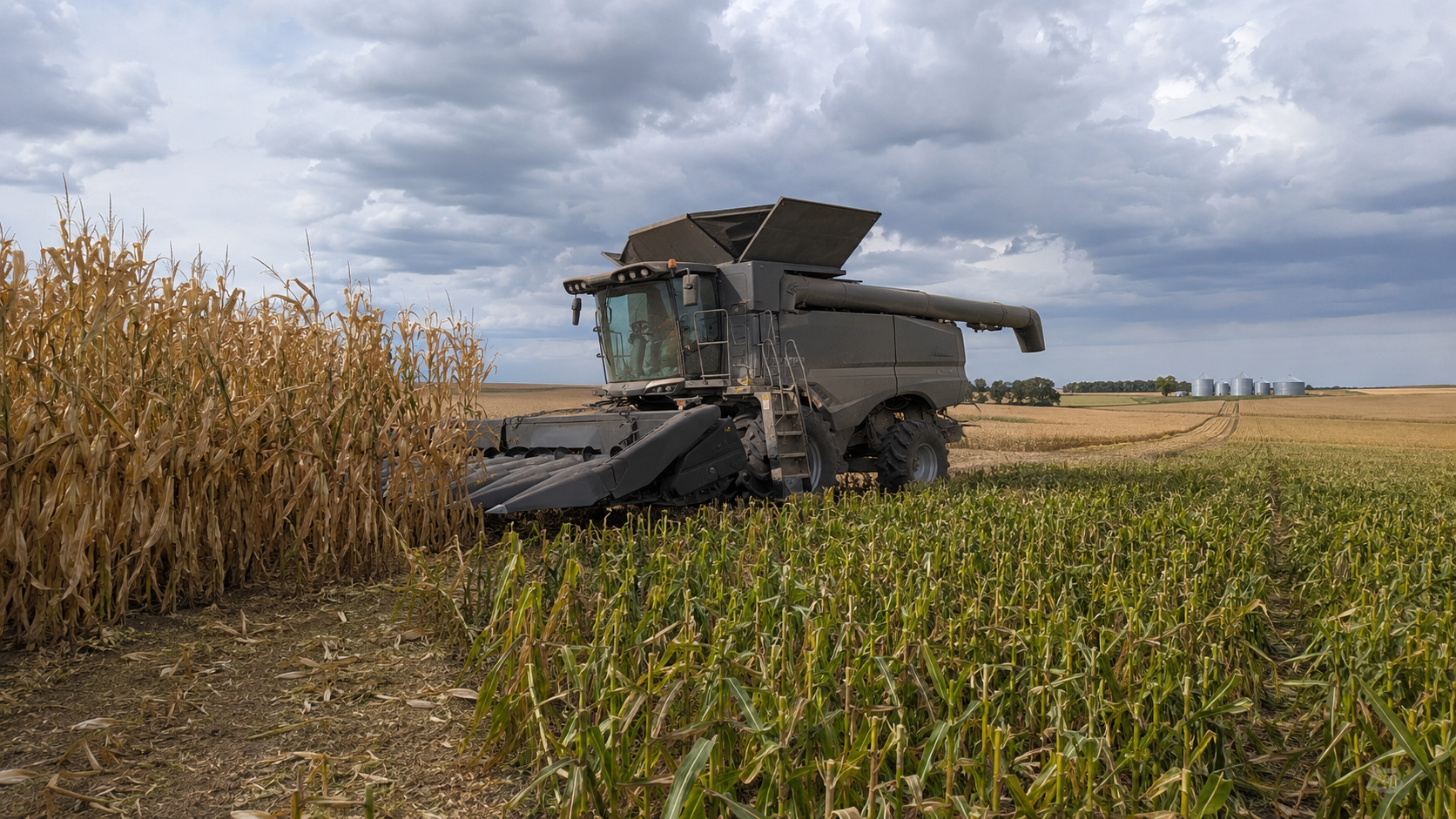
    Bayer is continuing Canadian development of its Preceon corn, whose plants stand about seven feet tall instead of more than ten feet for a conventional hybrid. The shorter architecture could support denser stands, reduce the volume of biomass passing through the combine and make late-season fertilizer or fungicide applications easier with ground equipment.

    The trait now sold in the United States is genetically engineered, but Bayer plans to market a Canadian version developed through conventional breeding using a naturally occurring trait. The company has provided no release date and says it will wait until the hybrids can deliver top-tier yields.

    My perspective

    I am very curious to see this corn. Its shorter stature should make it less vulnerable to storms and lodging. If higher plant populations can actually improve yields, that would be excellent. I also wonder whether a shorter plant might require fewer nutrients.

    I do not expect to see this type of hybrid in silage corn anytime soon, since silage production also depends on biomass. It would become much more interesting, however, if a higher plant population could produce a similar volume with a greater proportion of grain.

    Read the Farmtario article

  • Carney Takes Aim at U.S. Dairy

    Carney Takes Aim at U.S. Dairy

    U.S. dairy products entering Canada within our tariff-rate quotas could soon become significantly more expensive. Mark Carney’s government has announced a new round of countermeasures covering C$27.6 billion in U.S. imports, in response to tariffs imposed by Washington on Canadian goods.

    Starting September 8, Ottawa will impose tariffs of 15%, 25% or 50% on a long list of U.S. products. Dairy products are directly targeted, along with farm machinery and equipment, steel, appliances, pulp and paper products, and electronics.

    Imports within tariff-rate quotas are also targeted

    This is probably the most interesting detail for Canadian dairy farmers. The Department of Finance list does not target only imports above tariff-rate quota levels. Several tariff lines explicitly state that products imported within the access commitment will also face the new duties.

    Those quotas are at the heart of the market access granted to U.S. dairy products under CUSMA. I have already shown, using the trade data, that the United States already sells far more dairy products to Canada than Canada sells in return and that several quotas are not even fully used.

    For example, certain milk and cream powders containing no more than 1.5% milk fat will face an additional 50% tariff whether they enter within or above the access commitment. Several cheeses, including cheddar and other cheese categories, will face tariffs of 25%.

    In other words, Ottawa is not only targeting imports that already faced the high over-quota tariffs associated with supply management. It is also making part of the U.S. access to the Canadian market within those quotas more expensive.

    A possible effect on Canadian production

    If these tariffs make some U.S. dairy products less competitive in Canada, importers may reduce purchases from the United States. The missing volume would then have to be replaced elsewhere, including with more Canadian production where the product can be supplied domestically.

    For producers, this is therefore something worth watching closely. A real decline in imports could eventually translate into higher demand for Canadian milk and, depending on the scale of the shift, more incentive days or higher production requirements.

    Still, it would be a mistake to jump to conclusions too quickly. Tariff-rate quotas are not automatically filled to 100%, processors can change their sourcing, and the effect will vary by product. A tariff on imported cheese does not have exactly the same effect on Canadian milk demand as a tariff on milk powder.

    Farm equipment is also in the crosshairs

    Canada’s response does not only affect what farms produce. It also affects some of what farms buy. U.S.-made farm machinery and equipment are among the imports targeted by the counter-tariffs.

    For producers who need to replace a machine, buy a major part or invest in new equipment, these duties could have the opposite effect from those applied to dairy. Instead of protecting a Canadian market, they could raise the cost of a farm investment when the product comes from the United States.

    This is another part of the story that will need close attention in the coming months. A trade war can give with one hand and take with the other: lower U.S. dairy imports could support demand for Canadian milk while tariffs on machinery and equipment raise some production costs.

    A measure that may be temporary

    This is also the main reason for caution. These counter-tariffs are part of a trade conflict, not a permanent reform of Canadian dairy policy. Ottawa presents them as a direct response to U.S. tariffs and says its retaliation is meant to match the American measures.

    If the United States removes its own tariffs as part of a future agreement, Canada’s countermeasures could disappear as well. It would therefore be unwise for a farm to make long-term investment or expansion decisions today on the assumption that this added market protection will last for years.

    My view: this is an interesting development for dairy farmers. If some of the U.S. milk and dairy products currently entering Canada within our quotas become less competitive, Canadian production will probably have to increase to replace part of what no longer comes in. But I am not convinced this measure will be in place for very long. Before drawing conclusions about future production, we will need to watch actual import volumes very closely and, above all, follow how negotiations with the United States evolve. We will also need to watch the other side of the equation: if counter-tariffs make some U.S. farm equipment more expensive, part of the potential gain could show up in higher investment costs.

    An interesting political precedent

    For years, much of the trade debate around supply management has focused on the market access Canada must grant its trading partners within tariff-rate quotas. This time, the Canadian government is using that very access as leverage in its trade response.

    That is what makes this measure more interesting than just another round of tariffs between Ottawa and Washington. For once, the question is not only whether the United States will gain more access to the Canadian market. In the short term, Canada has instead made part of the existing U.S. access more expensive.

    The new duties are scheduled to take effect at 12:01 a.m. on September 8, 2026. From that point on, the most important number will be simple: do the targeted U.S. imports actually decline? If they do, that is when the impact on Canadian producers will start to become tangible.

    Sources: Department of Finance Canada, announcement of the countermeasures and official list of targeted products.

  • Agricultural news for August 24, 2026: cattle, crops and local slaughter rules

    Agricultural news for August 24, 2026: cattle, crops and local slaughter rules

    Three stories stand out today: Canada’s cattle herd is growing again, Quebec’s corn and soybean crops are shaping up well, and new provincial rules on local slaughter take effect this week.

    Canada’s cattle herd grows after several years of contraction

    According to estimates released by Statistics Canada on August 24, Canadian farms held 12.1 million cattle and calves on July 1, 2026, up 3.2% from one year earlier. Feeder cattle, slaughter cattle and calf prices had reached record highs during the first half of the year.

    The same report counted 14.0 million hogs, up 0.6% from July 1, 2025. The sheep breeding herd increased by 0.3% to 629,500 head.

    My view: this is a strong rebound in Canada’s cattle herd. If beef prices hold after the 90-day period during which the United States is easing access for ground beef imports, Canadian producers could find themselves in a favourable position. The question is whether that temporary window will have any lasting effect on prices or whether the market will remain tight enough to support this recovery.

    This ties directly into my analysis published this morning on the 300,000 tonnes of beef the United States plans to bring in over 90 days.

    Read Statistics Canada’s livestock estimates

    A very good corn and soybean harvest is taking shape in Quebec

    As harvest approaches, several field-crop advisers interviewed by La Terre de chez nous expect a good, and in some areas very good, corn and soybean crop across Quebec. Overall yield potential is viewed as slightly above average, despite some regional variability and localized issues such as dry conditions and sclerotinia.

    My view: it is always good news when we are told to expect strong harvests. The next question is what crops will look like across the rest of North America and, above all, whether prices will be there. Good yields alone do not guarantee a good year if abundant production across the continent puts downward pressure on markets.

    Read the report from La Terre de chez nous

    Local slaughter: the new rules take effect this week

    Quebec’s amendments to the Food Regulation take effect on August 29. The changes were already explained in detail in the August 15 agricultural news review. Among other changes, producers will be able to more easily market meat at retail from their own animals slaughtered at a local slaughterhouse, subject to the applicable permits and requirements. The rules also provide more flexibility for the layout of robotic milking systems.

    My view: this is positive news. By making local sales easier, these changes can help stimulate local economies and allow producers who choose this model to capture a little more income directly from what they produce.

    Read Quebec’s local agriculture strategy

  • 300,000 Tonnes of Beef in 90 Days: Can Trump Really Lower Hamburger Prices?

    300,000 Tonnes of Beef in 90 Days: Can Trump Really Lower Hamburger Prices?

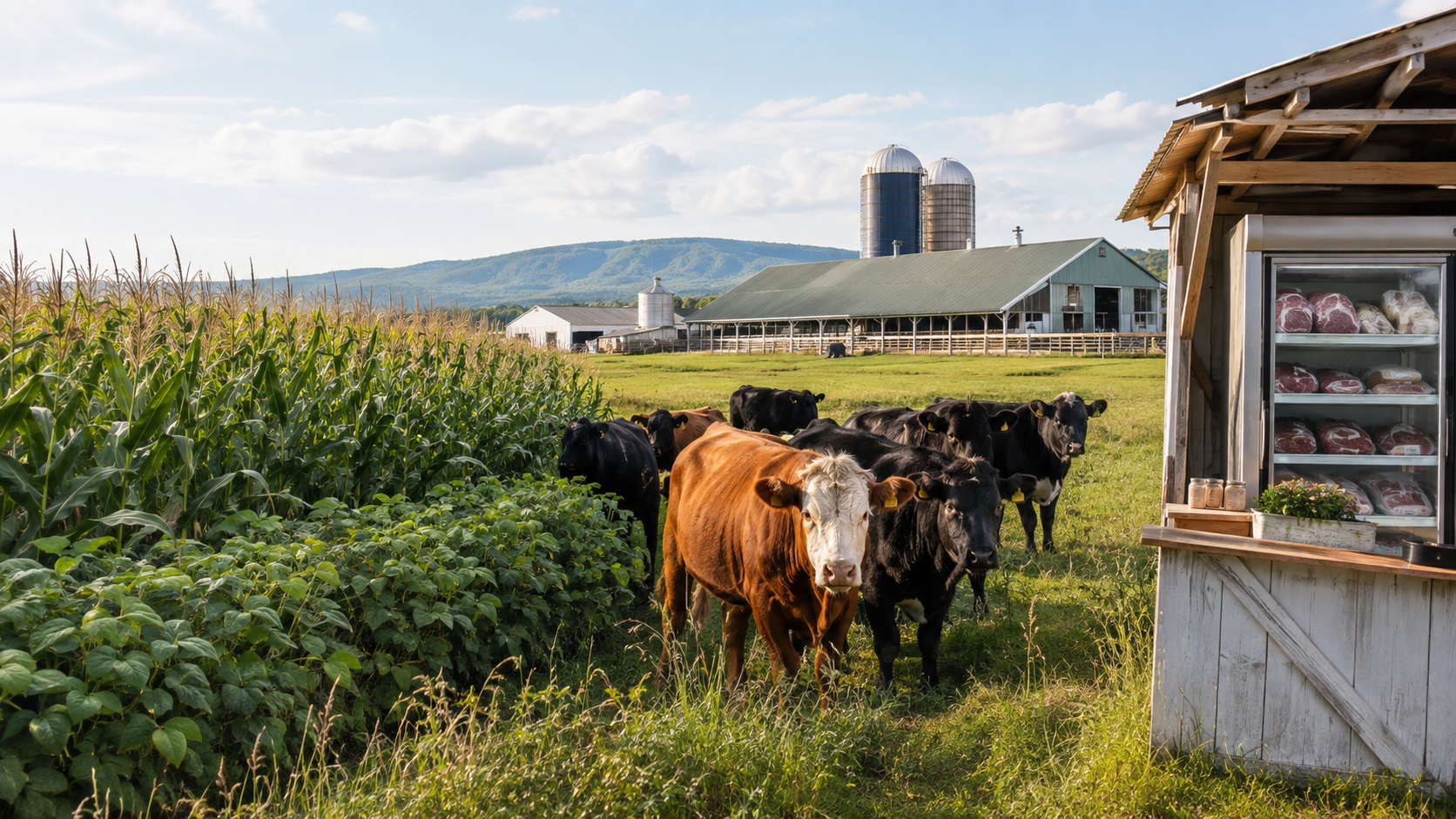
    Donald Trump wants to bring down the price of ground beef in the United States quickly. To do it, his administration will allow up to 300,000 metric tonnes of products intended for ground beef to enter the country tariff-free for 90 days, beyond the volumes normally covered by U.S. import quotas.

    The president has also said the beef would be sold at 25% below current market prices. For now, however, several important details remain unclear: which countries will supply the beef, how the volumes will be allocated, which exporters will qualify, and exactly which products will be eligible.

    Why is U.S. beef so expensive?

    The underlying problem is fairly simple: the United States does not currently have enough cattle.

    As of July 1, 2026, USDA counted 28.5 million beef cows in the United States, down another 1% from a year earlier. The 2026 calf crop is also expected to decline, to 32.5 million head. At the same time, heifers kept for beef-cow replacement are up 3%, suggesting that herd rebuilding may finally be starting.

    But rebuilding a cattle herd cannot happen quickly. A heifer kept today must be raised, bred, calve, and then her calf must itself grow long enough to enter the beef supply chain. We are talking about years, not months.

    That is one reason the United States already imports enormous quantities of beef. In 2025, U.S. beef imports reached a record 5.47 billion pounds, and USDA projected roughly 5.68 billion pounds for 2026. Much of that imported product is lean beef used in U.S. ground beef production.

    Producers are pushing back

    American cattle producers have not exactly welcomed the announcement.

    Their argument is understandable. When supply is tight and prices rise, the market normally sends producers a signal: producing more becomes more attractive. In the cattle business, that can mean keeping more heifers for breeding instead of sending them into the beef supply chain.

    Some producer groups therefore argue that increasing imports precisely when prices are high could weaken the economic incentive needed to rebuild the U.S. herd.

    That argument deserves some nuance.

    Three months is a very short time in the life of a cow

    The announced measure lasts only 90 days.

    If this is genuinely a one-time, temporary measure, I would not change an entire breeding strategy because of it. A cattle producer deciding today whether to retain a heifer is making a decision based on conditions expected one, two, or three years from now, not simply on the price of beef over the next quarter.

    If producers believe the extra imports will disappear after 90 days and the U.S. cattle market will remain structurally tight, keeping replacement heifers still makes sense.

    The greater risk would come if producers begin to believe Washington will repeat the same intervention every time beef prices rise above a politically acceptable level. At that point, the issue is no longer 300,000 tonnes. It becomes the signal sent to the market: if prices rise too much, the government will step in to push them back down.

    That kind of expectation could affect long-term investment decisions.

    A lot of beef, but also a very large market

    Three hundred thousand tonnes is about 661 million pounds of beef. That is a large number.

    But the United States was already importing more than 5 billion pounds of beef per year before this announcement. The additional volume therefore amounts to roughly 12% of recent annual imports, concentrated into a three-month period.

    Will that be enough to create a major decline in the retail price of ground beef? That, to me, is the real unknown.

    The price will probably fall. Grocery stores may even run specials showing discounts in the neighbourhood of 25% for a while. But the idea that consumers will enjoy a lasting 25% reduction because imported beef itself is 25% cheaper is, to put it mildly, far-fetched.

    There are importers, processors, distributors and retailers between the imported product and the consumer. If a cheaper raw material enters the system, it does not follow that the entire saving will be passed along indefinitely. Before long, every link in the chain will have an opportunity to take a piece of the margin.

    The irony is hard to miss

    There is also a rather spectacular political irony here.

    The Trump administration regularly portrays government intervention in markets as socialism or even communism. Yet when American consumers face politically uncomfortable beef prices, Washington is directly changing import conditions in an attempt to force those prices lower.

    This is not a criticism of helping consumers. A temporary increase in imports may well ease some pressure at the grocery store. But it is still government intervention in the market, and a fairly explicit one.

    The contrast is especially striking given how often the United States criticizes agricultural market-management systems elsewhere, including in Canada.

    Consumers now, producers later

    This episode illustrates a broader agricultural dilemma.

    Everyone wants farmers to be profitable, right up until that profitability translates into food prices consumers find too high.

    High prices are also the mechanism by which a market encourages more production. In cattle, however, the biological response is painfully slow. Consumers buy hamburger this week; producers make herd decisions measured in years.

    Washington has clearly chosen to address the first problem immediately.

    Whether 300,000 tonnes will meaningfully change what Americans pay at the meat counter remains to be seen.

    And once the 90 days are over, the underlying problem may look exactly the same as it did before: the United States still does not have enough cattle.

  • Lactalis in Canada: Good or Bad News for the Dairy Industry?

    Lactalis in Canada: Good or Bad News for the Dairy Industry?

    In less than a month, Lactalis has made two moves that deserve the attention of Canada’s dairy sector. On July 15, the French giant reached an agreement to acquire Agropur’s fine-cheese business, including the OKA, Monsieur Gustav and L’Extra brands and the plants in Oka and Saint-Hyacinthe. Then, on August 14, Lactalis announced a £988 million deal, about US$1.34 billion, to buy Saputo’s British dairy operations.

    Two different transactions on two continents. But together they illustrate something much bigger: the rise of Lactalis in Canada is part of a global growth strategy, and Canada is clearly one of the markets where the group wants a larger presence.

    So for Canadian dairy farmers, is that good news or bad news?

    Lactalis in Canada: a giant that is actually investing

    It would be too simplistic to describe Lactalis as a foreign company merely taking Canadian market share. The group already has a substantial industrial presence in this country.

    According to Lactalis Canada, the company operates 19 manufacturing sites in Canada, employs about 4,500 people and processes roughly 2.2 billion litres of 100% Canadian milk. Since 2018, it also says it has invested more than $900 million in capital projects and transformation initiatives in Canada.

    Its portfolio already includes extremely familiar brands: Cracker Barrel, Black Diamond, P’tit Québec, Balderson, Ficello, Astro, IÖGO, Olympic, Lactantia, Beatrice, Galbani and Président, among others. If the acquisition of Agropur’s fine-cheese business receives Competition Bureau approval, OKA, Monsieur Gustav and L’Extra will be added to that list.

    From a dairy farmer’s perspective, there is an obvious positive argument here. A company that invests in Canadian plants and processes milk produced here is far more useful to our sector than growth based simply on importing finished dairy products.

    But how large do we want Lactalis to become?

    The downside is concentration.

    Lactalis is not simply a large processor. The group describes itself as the world’s leading dairy company, with 2025 revenue of €31.2 billion, 266 dairies and cheese plants in 49 countries and 124 acquisitions completed over twenty years.

    Acquisitions are therefore a core part of its strategy.

    In Canada, that strategy has already reshaped the dairy aisle. When Parmalat, now Lactalis Canada, acquired Kraft Heinz’s natural-cheese business, the Competition Bureau noted that the main competitors in regular grocery-store cheese were essentially Parmalat and Kraft Heinz, Saputo with Armstrong, and retailers’ private labels.

    The Bureau ultimately cleared that transaction in 2019, concluding that it was unlikely to substantially lessen competition. But each new acquisition gradually changes the landscape. The proposed purchase of OKA and Agropur’s other fine-cheese assets is itself expressly subject to Competition Bureau approval.

    The real question is not whether Lactalis is “too big” simply because it is foreign. The question is at what point the concentration of brands, plants and processing capacity in one group’s hands begins to reduce meaningful competition. That issue of market power in the dairy chain also connects directly to the debate over farm-gate prices, processing and the supposedly free dairy market.

    The Agropur case is especially sensitive

    When market share moves from Saputo to Lactalis, it is essentially a transfer between two private companies processing Canadian milk.

    Agropur is different. Agropur is owned by its dairy-farmer members. A business held by the cooperative therefore allows farmers, at least in principle, to participate more directly in the value created beyond the farm gate.

    Seeing a producer-owned cooperative sell iconic brands such as OKA to a multinational can therefore create perfectly legitimate discomfort.

    But Agropur’s own strategy also matters. The cooperative says its fine-cheese operations were profitable, but represented only about 2% of consolidated revenue and 2% of the milk processed in its Canadian plants. Agropur says it wants to focus investment on value-added fluid milk, industrial cheese, butter and dairy ingredients.

    A few months before announcing the fine-cheese sale, Agropur unveiled investment projects approaching $1 billion in Beauceville, Quebec, and Bedford, Nova Scotia, to expand its capacity in value-added dairy proteins. Those projects still require final approval, but they suggest the cooperative is not abandoning the Canadian market. It is choosing where to concentrate its capital.

    What about Saputo’s sale in the United Kingdom?

    The agreement announced August 14 for Saputo’s British dairy operations is striking in size: £988 million. More than anything, it demonstrates Lactalis’s financial strength and appetite for acquisitions on a global scale.

    It would be risky, however, to conclude that Saputo is selling in the United Kingdom because it expects an imminent battle with Lactalis in Canada. There is currently no public evidence establishing that connection.

    The broader hypothesis remains interesting: in an increasingly concentrated global industry, major processors are choosing their markets and product categories with greater discipline. Some assets are sold to free up capital while other sectors receive large investments.

    What we can say with confidence is that Lactalis is currently on the buying side.

    Supply management does not answer this question

    This development also highlights a distinction that is sometimes overlooked in debates about supply management and the pressures facing Canada’s dairy market.

    Supply management is primarily designed to govern milk production, farm-gate pricing and access to the Canadian market. It does not guarantee that the companies processing that milk are Canadian-owned, much less farmer-owned.

    It is entirely possible to maintain strong Canadian milk production under supply management while seeing a growing share of brands and processing capacity owned by large international groups.

    That is not automatically a bad thing. A global processor can bring capital, technology, market access and marketing capacity that smaller companies may not have. But ownership of processing also influences where profits end up and who holds bargaining power in the food chain.

    So, good news or bad news?

    Probably both.

    For Canadian dairy farmers, Lactalis can be good news when it invests here, modernizes plants and grows sales using Canadian milk. The company has the financial resources to support its brands against powerful retailers, develop new products and compete with other global giants.

    But Lactalis’s growth becomes a concern when it steadily reduces the number of major independent processors and concentrates ever more brands and production capacity in the same hands.

    The problem may therefore not be Lactalis itself. It is the speed at which the global dairy sector is consolidating.

    For Agropur and Saputo, the recent transactions may be perfectly rational portfolio decisions. For Lactalis, they clearly fit a growth strategy that has been unfolding for decades.

    And for us as dairy farmers, the issue deserves close attention. We benefit from having strong processors capable of investing and selling our products. But we also benefit from having enough of them that no single company becomes indispensable.

    Sources

  • Dairy Farmers Are Millionaires. Yes, but…

    Dairy Farmers Are Millionaires. Yes, but…

    We hear it regularly whenever agriculture comes up: “Dairy farmers are millionaires.”

    That is not entirely false.

    Many dairy farms own assets worth several million dollars: land, buildings, livestock, machinery, equipment and, in Canada, quota. Taken together, all of that can represent a considerable amount of wealth.

    So why do we not see all these farmers living like millionaires?

    Because two very different things are being confused: owning valuable assets and earning a high income.

    A multimillion-dollar farm is not a bank account

    Imagine a farm valued at $5 million.

    That does not mean its owner personally has $5 million. You first have to subtract the farm’s debt and account for the fact that the business may be owned by several shareholders or members of the same family. A farm with $5 million in assets, $2 million in debt and several owners clearly does not make each of them a person with $5 million to spend.

    Most importantly, those millions are tied up in productive assets.

    A hectare of land worth $30,000, $40,000 or $50,000 does not pay the grocery bill. Neither does a valuable barn. The same is true of a tractor, a cow or dairy quota.

    Those assets exist to produce.

    To turn that wealth into cash, a farmer generally has to sell part of the production system, borrow more money or, ultimately, sell the business.

    It is real wealth. But it is nothing like holding a few million dollars in financial investments and being able to draw on them to fund your lifestyle.

    What do farms actually pay out?

    A dairy farmer usually does not punch a time clock when entering or leaving the barn. Yet the hours add up: animal care, feeding, milking, field work, machinery maintenance, repairs, administration, paperwork, emergencies, calvings, weekends and long days dictated by weather.

    Statistics Canada data provide a useful glimpse of what farm families actually receive in wages.

    In 2023, Canadian dairy farms paid an average of $43,710 in salaries and wages to family members, according to Statistics Canada’s Farm Financial Survey.

    That figure has to be interpreted carefully. It can cover more than one family member and does not include dividends or certain withdrawals from the business. It is therefore not the “average dairy farmer salary.”

    But it illustrates the contrast very clearly: the value of a farm and the money actually paid to the people working there are two very different realities.

    A business owner can also build equity as debt is paid down or assets appreciate. That increases net worth without necessarily increasing the amount of money available for day-to-day living.

    In other words, owning a share of a business worth several million dollars absolutely does not mean receiving the kind of income usually associated with a millionaire.

    “Then just sell the farm”

    That is usually the next response.

    If the farm is worth millions, why not simply sell it?

    Because a farm is not just an investment.

    It is the farmer’s workplace. It is what generates income. Often, it is also a business the family has operated for generations and hopes to pass on to the next one.

    Telling a farmer they can become rich by selling the farm is therefore a bit like saying: “You could have a lot of money if you liquidated your business and gave up your profession.”

    Technically, that can sometimes be true.

    But even then, the gross sale price is not what ends up in the seller’s pocket. Debt must be repaid, transaction costs paid and, depending on the situation, taxes may also apply.

    And that still says very little about the farmer’s standard of living during the thirty or forty years spent operating the business.

    Part of those millions may never be cashed out

    Family farms have another important characteristic: they are often transferred to the next generation for less than full market value.

    That is not necessarily an act of pure generosity.

    A dairy farm may hold enormous asset value without generating enough profit for a young farmer to borrow the full market value of the business.

    Take again a farm worth several million dollars.

    If the older generation demands every dollar of that value at transfer, the successor has to come up with enormous capital or take on massive debt to buy the business. The same farm then has to generate enough cash to service that debt, pay operating expenses, reinvest and support the new generation.

    At some point, the numbers simply stop working.

    So for the farm to continue, owners may agree to transfer part of the business below market value.

    In other words, a dairy farmer can spend a career building several million dollars of value inside a business, never personally have access to those millions, and then voluntarily give up part of that value so the farm can survive after retirement.

    That is a rather unusual definition of a millionaire.

    But the wealth is still real

    It would be just as misleading to go to the opposite extreme and pretend the value of farms does not matter.

    It matters a great deal.

    A dairy farmer who owns a business with substantial equity has real wealth. That asset can serve as collateral, appreciate in value and eventually be sold. All else being equal, that is obviously not the same financial situation as someone who owns no assets.

    And if an owner chooses to liquidate the farm at full market value rather than transfer it, they may indeed realize a significant amount of accumulated wealth.

    There is no reason to deny that.

    But that is not the point.

    The question is whether the value of a farm tells us the income and living standard of the farmer operating it.

    And there, the answer is clearly no.

    Millionaires on paper

    So, are dairy farmers millionaires?

    For some, if you add up the net value of their ownership stake in the business, yes.

    But if by “millionaire” we picture someone with a very high income, substantial liquidity and millions of dollars they can freely spend, the image quickly becomes misleading.

    A farmer can simultaneously own a share of a multimillion-dollar business, work 60 hours or more in some weeks, draw a relatively modest income and hope one day to transfer that business to their children for far less than an outside buyer might be willing to pay.

    That is not a contradiction.

    It is simply the difference between being wealthy in assets and being wealthy in available cash.

    And when we talk about dairy farmers’ income, that distinction deserves to be made.

    This claim is also one of the ten “myths” about supply management raised by Sylvain Charlebois that I examined point by point.

    Further reading

  • Supply Management: Is Canada’s Agricultural Shield Beginning to Crack?

    Supply Management: Is Canada’s Agricultural Shield Beginning to Crack?

    Canada’s supply management system has survived decades of trade negotiations, several changes of government and repeated campaigns predicting its imminent demise. It is still standing, and since 2025 it has even benefited from unprecedented legislative protection. Yet rarely has the system been placed so directly at the centre of a trade power struggle.

    The threat no longer takes only the form of an explicit demand for abolition. It appears through a succession of concessions, technical challenges and tariff pressure that can, piece by piece, reduce the share of the market actually reserved for Canadian producers. This gradual erosion, more than any sudden deregulation, is now the main danger.

    A system that organizes the market rather than subsidizing it

    Supply management rests on three pillars: matching production to Canadian demand, a pricing mechanism intended to cover the costs of efficient production and import controls. It applies to dairy, chicken, turkey, table eggs and broiler hatching eggs. The Farm Products Council of Canada describes it as a way to avoid both overproduction and shortages, provide fair returns to producers and maintain a stable supply.

    The principle is straightforward: produce according to what the domestic market can absorb. In non-quota sectors, a good year can quickly become bad news if all producers expand at the same time and push prices down. Supply management reduces this classic cycle of expansion, surplus, price collapse and consolidation.

    The model does not guarantee wealth. Farms remain exposed to feed, energy, labour, building and financing costs. It does, however, provide predictability that supports long-term investment without relying as heavily on public payments when markets collapse. In 2024, supply-managed sectors generated more than C$15 billion in farm cash receipts, according to Agriculture and Agri-Food Canada transition materials.

    The immediate threat: the power struggle with the United States

    The review of the Canada-United States-Mexico Agreement was already expected to bring supply-managed agriculture back to the forefront. Washington has long criticized Canada’s over-quota tariffs, dairy tariff-rate quota administration and certain pricing mechanisms. The 2026 U.S. National Trade Estimate Report maintains those complaints.

    Canadian tariffs that can exceed 200% are often presented as proof of a completely closed market. That description is incomplete. Those rates mainly apply to imports above negotiated quota volumes. Within those quotas, significant quantities of foreign products already enter Canada at reduced or zero tariffs. Federal data on tariff-rate quotas for supply-managed products show separate access commitments under the World Trade Organization, the CPTPP and CUSMA.

    By the summer of 2026, the confrontation had become more concrete. The U.S. administration linked the treatment of American dairy exporters to a new tariff measure against Canada. In a July 20, 2026 statement, the U.S. Trade Representative invoked Section 338 and announced additional duties while specifically criticizing Canada’s treatment of the U.S. dairy sector.

    Supply management has therefore become a bargaining chip in a dispute that also touches automobiles, alcohol, public procurement and other Canadian policies. The danger is clear: even if Ottawa refuses to abolish the system, it could face pressure to grant more market access in exchange for concessions elsewhere.

    The erosion began long ago

    Canada preserved the architecture of supply management in its major trade agreements, but it gave up part of its domestic market in each of the last major negotiations. The agreement with the European Union, the Comprehensive and Progressive Agreement for Trans-Pacific Partnership and CUSMA all created or expanded import quotas.

    Each additional access commitment may look limited on its own. Taken together, they represent sales Canadian farms can no longer make. The problem is structural: domestic demand does not automatically rise to offset imports. When foreign products take a larger share of the market, Canadian production must fall or grow more slowly.

    The federal government itself acknowledged these losses by creating compensation programs for producers and processors. Those payments helped affected businesses invest, but temporary compensation does not replace a market lost permanently. It mainly confirms that trade concessions carry a real cost.

    The CPTPP illustrates the mechanism well. Canada granted permanent quotas for dairy, poultry and eggs, phased in over time and set to expand. The official summary of the agreement says market access was granted while the three pillars of supply management were maintained. That is legally true, but economically, the import-control pillar can be weakened without disappearing altogether.

    Bill C-202: a real shield, but not an absolute guarantee

    Since June 26, 2025, Bill C-202 has prohibited the Minister of Foreign Affairs from entering into certain trade commitments that would increase tariff-rate quotas on supply-managed products or reduce over-quota tariffs. This is a major change: protection of the system no longer depends only on a political promise repeated at every negotiation.

    The law sharply reduces the room available to a Canadian negotiator who might otherwise trade away more dairy, poultry or egg market access for gains in another sector. The government says this is consistent with its policy of defending all three pillars, as explained in Global Affairs Canada briefing documents.

    But no ordinary statute is irreversible. A future Parliament can amend a law. Commercial pressure can also shift toward areas the law protects less directly: quota-allocation rules, composition standards, product classifications, import permits or pricing policies. The battle can therefore become more technical without becoming less important.

    Critics of supply management argue that C-202 removes a bargaining chip from Canadian negotiators in advance. That criticism deserves consideration, but it also reveals the law’s real purpose: to stop supply-managed farms from repeatedly serving as trade currency for other industries. After three major agreements that gave away market access, drawing a line is hardly excessive.

    Technical challenges: opening the market without abolishing the system

    Recent dairy disputes have not necessarily targeted the elimination of Canadian production quotas. They have focused mainly on how Canada allocates import quotas. The United States challenged the share reserved for Canadian processors, arguing that the method limited commercial opportunities for U.S. exporters.

    That may sound administrative, but the consequences can be substantial. A quota can exist on paper; allocation determines who can use it, which products enter and when. Changing those rules can increase competition in specific parts of the Canadian market without formally reopening the entire agreement.

    The same logic applies to product categories and ingredients. In a food industry where milk proteins, preparations and processed products cross borders in many forms, a regulatory definition can matter as much as a tariff. Defending the system therefore requires constant technical expertise, not just broad political declarations.

    Domestic pressure: food prices, concentration and the battle over the narrative

    Supply management is also vulnerable politically within Canada. During periods of food inflation, it is tempting to blame the price of milk, eggs or chicken entirely on farm income. Yet the farm-gate price is only part of the retail price. Processing, transportation, packaging, distribution and retail margins all intervene between the barn and the checkout.

    The system must still accept transparency. Its defenders gain nothing by pretending it is perfect. Entry costs tied to quota can complicate farm transfers and new entrants. Rules must evolve with consumption. Producers must also demonstrate progress on animal welfare, the environment and productivity.

    But abolishing supply management would not eliminate Canadian production costs or concentration in processing and retail. It would mainly shift more risk onto farms and expose the domestic market more directly to foreign surpluses. In countries that support producers differently, assistance often comes straight from the public treasury. Consumers then pay part of their food bill as taxpayers rather than at the grocery store.

    Why defending it goes beyond farmers

    The debate is not only about quota values or the income of a few thousand farms. It concerns Canada’s ability to maintain production across its territory, close to consumers and subject to Canadian standards. In its National Food Security Strategy, Ottawa now presents supply management as a fundamental element of Canadian self-sufficiency in milk, eggs and poultry, as well as rural vitality.

    The pandemic, animal diseases, trade wars and logistics disruptions have shown that food supply cannot be reduced to the lowest price available on the world market on a given day. Lost production capacity cannot be rebuilt instantly. Geographically distributed farms are food infrastructure as much as they are an economic sector.

    The stability provided by the system also helps processors plan supplies and allows consumers to count on regular production. It reduces the violent swings between surpluses that devastate farmers and shortages that raise costs for the public.

    What to watch now

    The first line of defence will be the concrete application of C-202 during CUSMA discussions. Ottawa will have to resist not only requests for additional access, but also equivalent concessions disguised as technical changes.

    The administration of existing quotas will also need close attention. Canada must respect the agreements it has signed or risk adverse rulings and retaliation. But respecting negotiated access does not mean offering more than was agreed.

    Finally, farm organizations will need to explain the system more effectively to the public. The phrase “300% tariffs” is politically powerful because it is simple. The answer cannot merely be that it is misleading. It must explain volumes already imported, the difference between in-quota and over-quota tariffs, the composition of retail prices and the forms of farm support used elsewhere.

    An agricultural policy choice, not an anomaly to apologize for

    Supply management is not an accidental relic. It is a collective policy choice: match production to demand, pay prices that support viable domestic production and prevent the Canadian market from becoming an outlet for subsidized surpluses from major agricultural powers.

    Its main weakness today lies in accumulation. One small concession, then another; one technical change, then a new interpretation; one temporary compensation payment for a market lost forever. The system can keep its name and institutions while slowly being hollowed out.

    Canada’s legislative shield therefore arrives at a decisive moment. It does not remove the need to negotiate carefully, modernize the model or respond honestly to criticism. It does, however, establish a reasonable principle: dairy, poultry and egg producers should no longer be the automatic bargaining chip in every trade agreement.

    The question is no longer only whether supply management will survive. It is whether Canada is prepared to defend it in the details, where most of the battle is now being fought.

    Sources and references