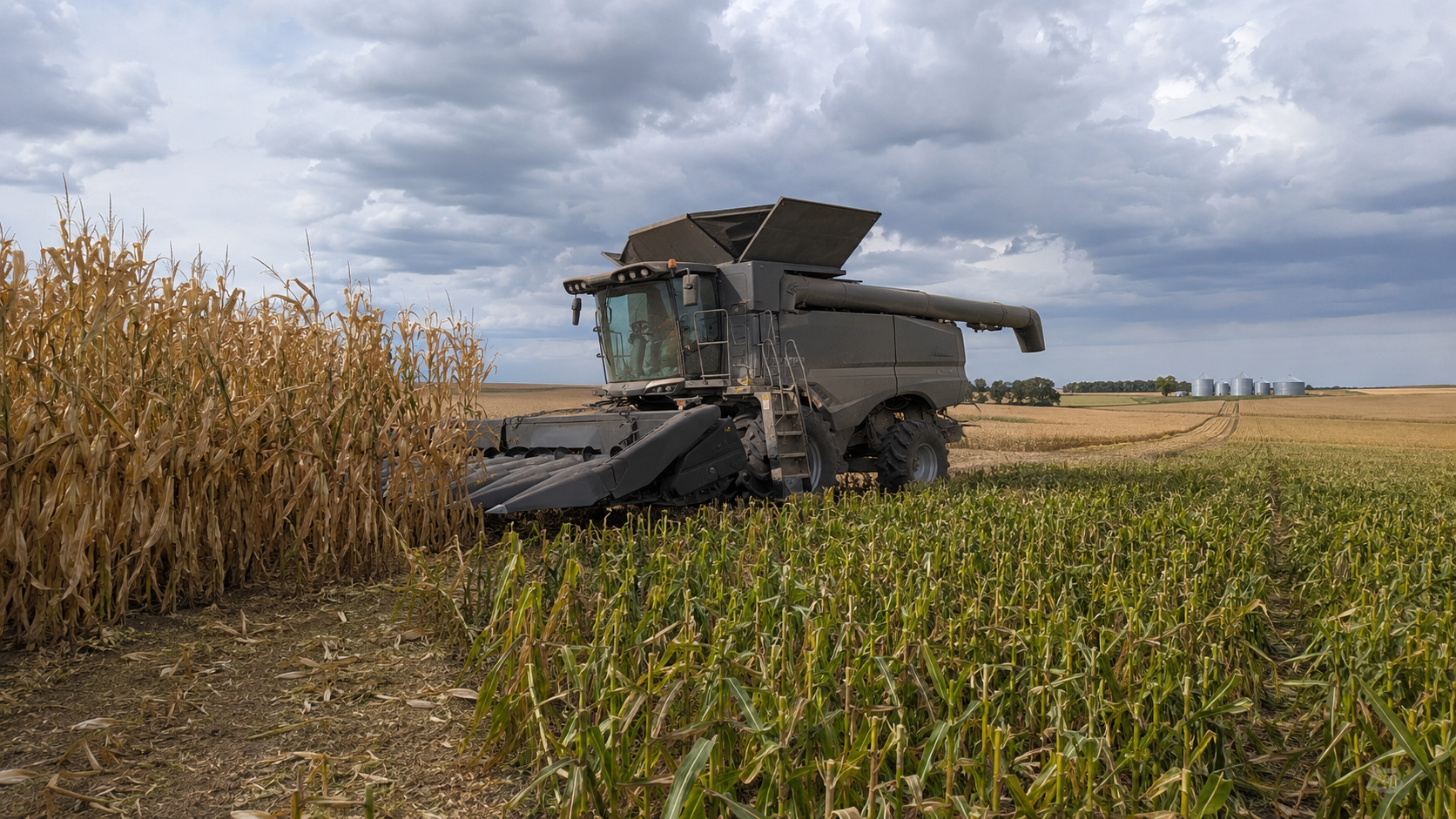
Three stories stand out in Canadian agricultural news today. Most complete farm machines have been left off Canada’s counter-tariff list, Alberta is reopening late AgriStability enrolment after extreme rainfall, and short-stature corn is attracting attention ahead of its eventual Canadian release.
Most farm machinery is excluded from Canada’s counter-tariffs
Canada has announced counter-tariffs on C$27.6 billion worth of U.S. imports starting September 8. Despite early broad references to agricultural equipment, a closer look at the detailed list shows that most complete farm machines are not included.
The measures appear to focus on certain combine parts, headers sold separately, baler parts, some mowing equipment, and selected trailers and conveyors. That detail reduces the risk of a broad price increase for U.S.-made tractors and farm machinery, although some purchases and replacement parts remain exposed.
My perspective
Overall, this is good news. But with corn harvest season approaching, the impact on certain parts could still become a problem for Canadian farmers. When harvest time comes, delaying a combine repair simply is not an option. Every day counts.
Read RealAgriculture’s detailed analysis
Review the official list of affected products
Alberta reopens AgriStability after extreme rainfall
The governments of Canada and Alberta are allowing Alberta producers to enrol in AgriStability until October 1, 2026, even if they missed the April 30 deadline. The measure responds to excessive moisture that has kept some producers out of their fields and prevented essential farm work.
The interim payment rate is also increasing from 50 to 75 per cent of the estimated final payment to get cash into affected farms sooner. Late enrolment, however, comes with a 20 per cent reduction in any eventual benefit.
My perspective
This is good news that will help support Alberta farmers affected by the extreme moisture. But they need to act quickly. The late-enrolment window closes on October 1.
Read the Government of Alberta announcement
Short-stature corn moves closer to the Canadian market
Bayer is continuing Canadian development of its Preceon corn, whose plants stand about seven feet tall instead of more than ten feet for a conventional hybrid. The shorter architecture could support denser stands, reduce the volume of biomass passing through the combine and make late-season fertilizer or fungicide applications easier with ground equipment.
The trait now sold in the United States is genetically engineered, but Bayer plans to market a Canadian version developed through conventional breeding using a naturally occurring trait. The company has provided no release date and says it will wait until the hybrids can deliver top-tier yields.
My perspective
I am very curious to see this corn. Its shorter stature should make it less vulnerable to storms and lodging. If higher plant populations can actually improve yields, that would be excellent. I also wonder whether a shorter plant might require fewer nutrients.
I do not expect to see this type of hybrid in silage corn anytime soon, since silage production also depends on biomass. It would become much more interesting, however, if a higher plant population could produce a similar volume with a greater proportion of grain.
Leave a Reply