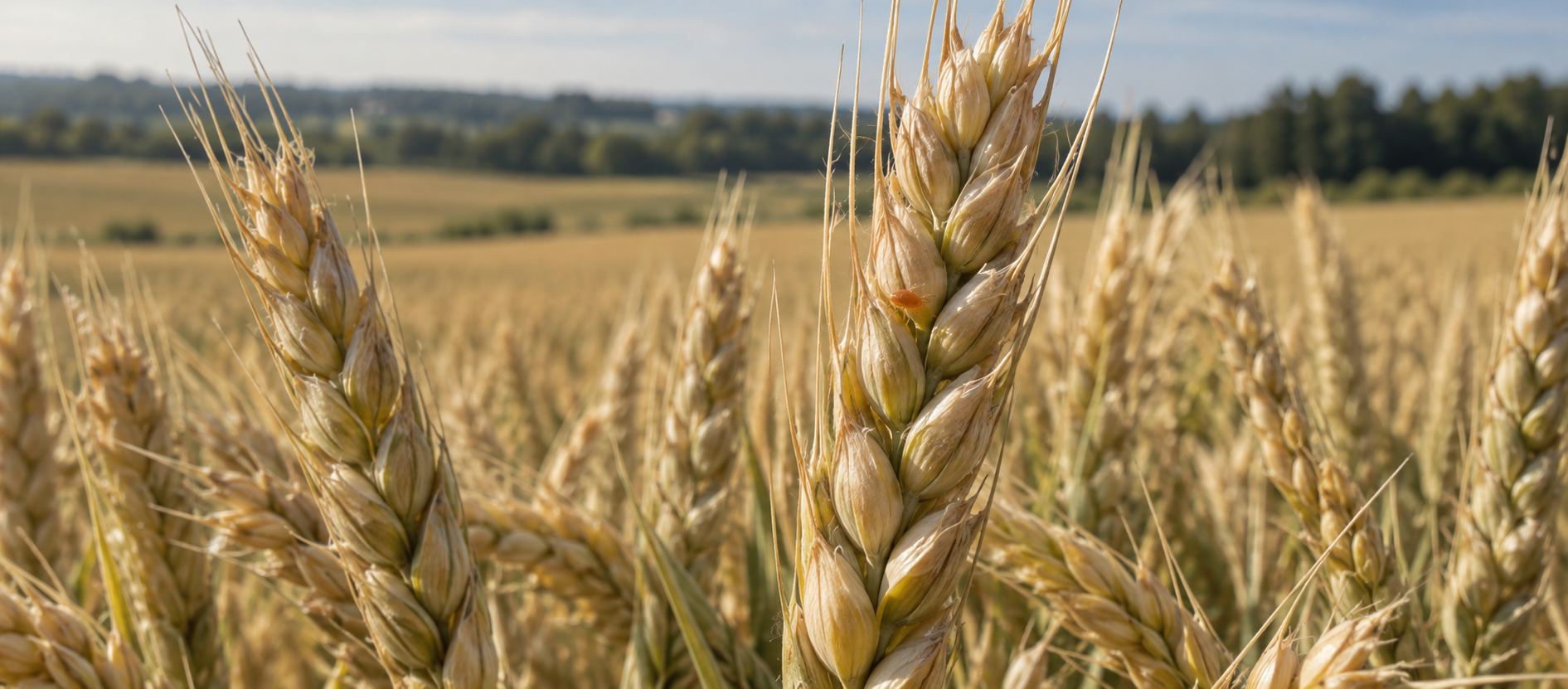
An insect normally associated with Prairie wheat has turned up much farther east. Orange wheat blossom midge was found this season in winter wheat fields across parts of Ontario and was also reported in Quebec. The finding does not yet establish widespread economic damage, but it points to a surveillance gap in central and eastern Canada.
Wheat midge appears in unusual eastern locations
Farmtario reports that wheat midge was identified in winter wheat in south-central, central and eastern Ontario, as well as in Quebec wheat fields. Quebec’s CÉROM has received reports from different parts of the province. Researchers are still assessing how widely the insect has spread and whether it caused measurable yield or quality losses.
The season’s weather may help explain the unusual activity. Prolonged snow cover over unfrozen soil could have insulated overwintering larvae. Spring rainfall, followed by warm nights that lined up with wheat heading and flowering, may then have created favourable conditions for adult emergence and egg laying.
The larvae feed on developing kernels. Infested heads can contain shrivelled or missing grain, and badly affected heads may die prematurely. That can reduce yield or downgrade grain quality. For now, however, the evidence supports closer scouting and monitoring, not the conclusion that eastern wheat has suffered a major regional outbreak.
The management challenge is that Canadian winter wheat varieties do not carry wheat-midge resistance. The registered insecticide option, dimethoate, must be timed against adults during a narrow crop stage and does not provide a simple answer after larvae begin feeding. Crop specialists are therefore calling for expanded trapping and monitoring in Ontario, Quebec and the rest of eastern Canada before the 2027 season.
Leave a Reply